Showing posts with label Robert Collins. Show all posts

Monday, February 15, 2016

High-Priority City: The ‘Republic’ of Pyongyang

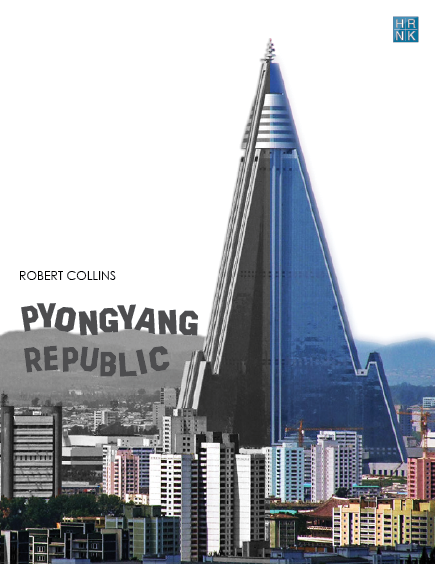
This is probably the best summary of Robert Collins' new report from the Committee for Human Rights in North Korea (HRNK).  The report can be downloaded directly at this link:https://www.hrnk.org/uploads/pdfs/Collins_PyongyangRepublic_FINAL_WEB.pdf

The video presentation from which this report was derived is at this link:

This is one of the most important reports that helps policy makers, strategists, planners, scholars, researchers, human rights activists, and students truly understand the nature of the Kim Family Regime (KFR)  (understand as in the Frank Hoffman recommended principle of war understanding - the deep understanding of the culture, politics, security apparatus, economy, etc).  One of the things that makes this report so valuable and credible is that Bob Collins was able to not only read primary source documents in Korean that were smuggled out of north Korea he conducted in depth interviews with north Koreans in their language.  He has arguably interviewed more north Koreans in their language than any other American in or out of government.

If you could only read one book on north Korea this would be it.  Those who wish predict or wish for regime collapse would do well to remember the definition we that developed when writing the first plans for north Korean instability and collapse in the 1990s:  regime collapse will occur when the KFR is no longer able to govern (through the party) from the center (Pyongyang) combined with the loss of coherency and support of the military.

High-Priority City: The ‘Republic’ of Pyongyang

The North Korean regime prioritizes the distribution of food, housing, and health care in favor of the residents of the capital city while the countryside languishes

By Epoch Times | February 14, 2016
Last Updated: February 14, 2016 11:57 pm
North Korean soldiers march in Pyongyang in July 2013.  (Ed Jones/AFP/Getty Images)
North Korean soldiers march in Pyongyang in July 2013. (Ed Jones/AFP/Getty Images)

WASHINGTON—The Democratic People’s Republic of Korea (DPRK) is regarded as the most oppressive political system in the world. Isolated from the rest of the world, with malnutrition of the general public, slave labor, and the absence of individual rights and freedoms—North Korea lies ranked at the bottom of nations, where the human misery is unfathomable.
How does the current regime under Supreme Leader Kim Jong-un maintain social control and perpetuate itself? In a report released on Feb. 10 at the American Enterprise Institute (AEI), author Robert Collins has provided an inside look at the DPRK, a comprehensive analysis of North Korea’s unique totalitarian control system.
In “Pyongyang Republic: North Korea’s Capital of Human Rights Denial,” Collins explains the system of sanctions and incentives that maintain the Kim Dynasty rule, culling data from a vast number of sources, including his own interviews for over 30 years of defectors in their native Korean language. All conclusions are backed up by 510 footnotes. The 177-page report is sponsored by the Committee for Human Rights in North Korea (HRNK).
The power structure of the country is wholly centralized. At the top of the pyramid is the Supreme Leader and people closest to him. Geographically, the capital city, Pyongyang, is “the power center of the Kim family regime,” says Collins.
(Gary Feuerberg/ Epoch Times)

The people who are most important for the Kim family political control are predominately located in Pyongyang. The Korean Workers’ Party, all government and security agencies, and the military are run out of the capital city. It’s where Koreans enjoy the most privileges, the best food and housing, health care and schools, and culture, with Pyongyang’s gyms, museums, playgrounds, and exhibition halls. Naturally, North Koreans want to live in Pyongyang.
(Continued at the link below)

Wednesday, February 10, 2016

Pyongyang Republic: North Korea’s Capital of Human Rights Denial


The report can be downloaded here.

https://www.hrnk.org/uploads/pdfs/Collins_PyongyangRepublic_FINAL_WEB.pdf

The video can be seen at this  link: https://www.youtube.com/watch?v=rZdKMM-3rLs

Pyongyang Republic: North Korea’s Capital of Human Rights Denial
Date and Time:
February 09, 2016 12:30 pm ~ February 09, 2016 01:30 pm
Location:
AEI Twelfth Floor 1150 Seventeenth Street, NW, Washington, DC 20036
Speakers:
Robert Collins, Nicholas Eberstadt, Helen-Louise Hunter, David Maxwell, Greg Scarlatoiu
Host Organization:

Description:
Presenter: 
Robert Collins
Author, Pyongyang Republic: North Korea's Capital of Human Rights Denial

Moderator: 
Nicholas Eberstadt
Board Member, HRNK
Henry Wendt Chair in Political Economy, AEI

Discussants: 
Helen-Louise Hunter
Board Member and Executive Committee, HRNK

David S. Maxwell
Board Member, HRNK
Associate Director, Center for Security Studies and the Security Studies Program,
Georgetown University

Greg Scarlatoiu
Executive Director, HRNK

Wednesday, December 9, 2015

International Journal Of Korean Studies - Latest edition published online

The latest issue of the International Journal of Korean Studies can be accessed at this link:  http://www.icks.org/publication/pub_2015_s.html

Each article can be accessed individually at site from the table of contents.  The PDF of the entire edition can be downloaded here: http://www.icks.org/publication/pdf/2015-SPRING-SUMMER/IJKS%202015%20Spring_Summer.pdf

All great articles but please take note of Sungmin Cho's article on potential assassination scenarios of Kim Jong-un

Saturday, July 26, 2014

N.Korean Elite 'Getting Restive'

We have seen a number of reports over the past few weeks that taken together indicate that there could be some significant problems within the regime. These include the "beans for leave" in the 5th Corps, the shooting of the Guards Corps cars in the north by military forces, and the defection of families of "senior" Army officials.  Now there is this significant report below.  We really need to be watchful and wary  - and we should wish we had been making all the preparations necessary since Robert Collins' published his seminal work in 1996, "Patterns of Collapse," also known as the "Seven Phases of Collapse" in which he describes the pattern or phases that the Kim Family Regime and the north Korean elite, military and security services, and the population might go through to reach the catastrophic collapse of north Korea.  The one thing he did not do is put a time estimate on this "process."  I have excerpted the definitions of each of the phases below for reference.  My assessment is that we are seeing the possible transition between Phase four "Suppression" and Phase five "Resistance"  but conditions could bounce back and forth between the two.  But if the regime is not able to continue effective suppression then we could see resistance grow and lead to Phase six, "Fracture."  This bears watching.

            a. Phase One: Resource Depletion - Economic collapse paradigm stresses across-the-board mistakes in domestic and foreign policies that contribute to inputs/outputs in a national  production model (nKorea emphasizes heavy industry over light industry at an 8:2 ratio).  Policy mistakes and subsequent failures in major components of the economy begin to impact infrastructure and economic sub-systems as major system-maintenance resources become unavailable.

            b. Phase Two: Prioritization - Quantity of resources becomes insufficient to supply/maintain each sub-system of infrastructure.  Administration employs one or both of two policies of selective provision:
                        - Selective provision policy one (SPP 1): Each sub-system receives proportionately less than minimum maintenance level; and/or:
                        - Selective provision policy two (SPP 2): Selected sub-systems receive no resources whatsoever in order to provide subsistance levels to the other sub-systems.

            c. Phase Three: Local Independence - Realization of lack of subsistence or perceived near-term lack creates localized independent motivation to acquire subsistence materials, either individually or collectively, through intentional circumvention of  established policy.  Sub-system types are collective farms, factories and administrative units that are integrated units whereby workers/citizens acquire social identification.

            d. Phase Four: Suppression - Empirically, localized independent economic activity implies a corresponding level of independent political intention.  This in turn is perceived by the Core Group as violation of state (read Core Group) policies and threatening to Core Group control.  National I/S assets will be employed with maximum, even indiscriminate, powers necessary to suppress actions that are in contradiction, or perceived to be in contradiction, of state policies.  This is the most pivotal of phases.  Successful suppression is critical to regime/Core Group survival and the continuation their policies. The lack of success in suppression  implies success in resistance.             e. Phase Five: Resistance - Based on success of suppression (or lack thereof), sub-system groups and/or individual leaders (as opposed to individuals) will elevate levels of resistance both horizontally and vertically, organizationally and violently.             f. Phase Six: Fracture - Progression to this phase is difficult without an extreme amount of violence occurring beforehand.  Increased and confident organizational resistance, from the local level upward, will move Core Group members (read military leaders with real power or influential civilians allied with real military power as opposed to mere influential leaders) to splinter into sub-groups.  These sub-groups splinter because of opposing views in dealing with the resistance.  The splinter process will be consistent with korean political socialization (loyalty based on family, association and/or classmate, regionalism).                       g. Phase Seven: Realignment - Should suppression fail and the fracture phase be reached, a realignment of national leadership will be unavoidable.  The elimination of the entire Core Group is not likely.  New national leadership will find it necessary to implement immediate reform consistent with its support base.  Realignment of the national leadership does not mean immediate peaceful unification with the Republic of Korea.
Also, below the article I have pasted some of the details of Phases four, five, and Six, Suppression, Resistance, and fraction for those who want to try to keep score.  The key question for the Kim Family Regime is whether it can maintain sufficient loyalty of the military and sufficient power to continue suppression.  Again, this bears watching.

N.Korean Elite 'Getting Restive'

Senior officials in North Korea's Workers Party and military are increasingly objecting to policies or ignoring orders from leader Kim Jong-un, leading to rumors that his grip on the country is weakening, sources said Tuesday.

A source said Kim Jong-un recently presided over a meeting on bolstering North Korea's power supply and called for more hydro-electric power plants, but senior officials claimed that the North's chronic power shortage can be resolved only by building nuclear plants. 

"Kim was furious and fired them on the spot, stripping them of their ranks," the source added.

As North Korea forfeited international support to build a light-water reactor after its nuclear test, Kim has been focusing on constructing large-scale hydro-electric projects like the Heecheon and Chongchon river dams. 

But officials insist that will not be enough to solve the chronic electricity shortage.
North Korea leader Kim Jong-un inspects a rural orchard in these photos released by Rodong Sinmun on Thursday. /NewsisNorth Korea leader Kim Jong-un inspects a rural orchard in these photos released by Rodong Sinmun on Thursday. /Newsis
On another recent occasion Kim watched a football match at a military base, and after he left the players beat up the referee to vent their anger at his decision while lower-ranking soldiers in the football squad assaulted senior officers, suggesting that discipline is fraying everywhere. 

A growing number of soldiers are disgruntled over being roped into labor in construction projects like a ski resort in Masikryong which is one of Kim's pet projects.

Another source said, "One high-ranking military officer was caught complaining about several new construction projects Kim Jong-un proposed in his New Year's address and was punished."

North Koreans are apparently disaffected because Kim was spotted flashing broad grins in public after a high-rise apartment collapsed in Pyongyang in May, killing around 400 members of the elite.

One foreign businessman who visited Pyongyang early this month said, "When Kim Jong-il was in power, North Koreans of all ranks parroted the same opinions, but this time it was different. There were quite a lot of North Koreans who complained about Kim Jong-un and senior party and military officials."
englishnews@chosun.com / Jul. 26, 2014 08:16 KST
            d. Phase Four: Suppression - Both the incorporation of local internal security elements into independent activity and the activity itself are perceived as direct challenges to the authority of Kim Chong-il and the Core Group.  The Core Group will respond to such challenges in both indiscriminate and calculated manners.  This phase must be successful to prevent the further breakdown of the regime’s control.  The regime’s full energies will address whatever the regime itself perceives as threats.  nKorea’s track record at suppressing isolated incidents is well established.  Again, success here is paramount to the survival of the regime and world public opinion will not be an effective deterrent.

                        1/ Internal Security systems (even paramilitary units) will be mobilized to employ indiscriminate force to make examples of groups of citizens or entire sub-system(s). Entire sub-systems, such as collective farms deemed collectively guilty of independent (read politically disloyal) activity, will be instantly converted into political crime camps guarded by military or paramilitary units.

                        2/ Local active-duty company and battalion-level military units will be mobilized to employ indiscriminate violent force for the most severe cases.  A severe case would be organized demonstrations (of any kind, but food riots would be an eminent example) against the local or national government.
                       
                        3/ Suppression operations could be streamlined to improve overall effectiveness in dealing with dissidence and/or independent activity.  An example of this streamlining would be the establishment of local “civil order” commands which consolidate local internal security and military assets.  (Inter-agency sharing of information and planning is indeed uncommon to the nKorean political structure.  However, the severity of the situation most likely would be perceived as justification to consolidate.) This inter-agency cooperation would facilitate both detection of and response to increased dissidence and/or independent activity.  The command function could vary.  Two proto-types would be a local ministry of state security official obtaining operational control of a military quick reaction force provided by the local military commander for the purpose of immediate countermeasure.  A more likely proto-type would be the requirement for local security officials to report not only up their chain of command but laterally or even directly to the local military commander.  The commander then acts on this information and, armed with the authority of the “local civil order command,” orders his troops to suppress the reported dissidence with whatever force necessary. 

                        4/ Mass arrests and purges. nKorea has a long history of this activity.  Political reasons are invariably cited as justification, even when activity is clearly not political but civil crime.  The nKorean regime has already divided the nKorean populace into 51 distinct categories of loyalty or disloyalty.  Those arrested and their families are reclassified to disloyal categories.  Arrests and purges become indiscriminate when local authorities feel personally threatened when pyongyang’s intended impact is not delivered to the expected extent.  

                        5/ Show trials and public executions.  These are employed to demonstrate regime’s resolve and demand for adherence to political guidelines.
            e. Phase Five: Resistance - This phase presupposes that the supression phase failed to meet its intended goals.  Local groups, even new sub-systems evolving out of independent activity, will gain confidence in their ability not to succumb to the government’s suppression attempts either through open resistance or manipulation of reporting that forwards false data.

                        1/  Refusal to obey government directives.  These directives will be ignored because those that resist perceive enforcement is unlikely.

                        2/ Usurpation of government assets, such as storehouses or competing sub-systems.  This will enhance the power of local resistance activities, whether economically or politically based.

                        3/ Threats and violence employed against internal security representatives to either win their culpability or simple elimination.  Resistance groups will lose their fear of internal security forces and either eliminate them, beginning at the basic level, or incorporate them into their local sub-system to assist in their activity.

                        4/ The more successful local resistance becomes, the more likely a resource-denied sub-system (which is already a paramilitary unit within the nKorean social system) will begin to employ counter-force against the regime’s mobilized military units.  Such an incident will become a central issue dominating the attention of the Core Group.

                        5/ Successful armed resistance, though only at the sub-system level (company to battalion-sized paramilitary level) will lead the regime’s Core Group to employ combined arms operations against the resistance group.  Some military leaders receiving such orders will hesitate to employ maximum indiscriminate force against local citizens and will immediately be relieved if not executed on the spot.  Other leaders will execute the executioner.  The depth of the resistance phase can be measured by the rank of the officer who does not obey orders from Pyongyang.

                        6/ Low echelon border units, along both the northern border and the DMZ, will cross the border and the mdl while senior echelons are preoccupied with resistance suppression.   Platoon commanders will be capable of initiating a platoon level crossing of the border or DMZ for the purpose of avoiding punishment, chaos, or worse.  After eliminating the company’s single political officer, a company commander would be capable of taking a whole company across the DMZ.  The senior battalion commander would be forced to call for artillery fires into the DMZ or beyond to halt the platoon or company-sized defections across the DMZ.  He would do this knowing that he would probably be immediately executed for permitting it to happen in the first place.  This process would not likely end until the division or corps level.

            f. Phase Six: Fracture - This phase is the most unpredictable.  The current regime and its Core Group members must see the success of the suppression phase as critical to their survival.  Failure of the suppression phase likely results in a quick transition through the resistance phase to the fracture phase.  Fracture will likely result in violence.  The types of fracture are calculable but where the fissures begin is not.  This phase will be characterized by the following:

                        1/ Internal Security systems (regional or national)  will be unable to comply with directives due to ineffectiveness.

                        2/ Core Group members or sub-group(s) openly (as opposed to private consultation) oppose Core Group directives.

                        3/ Division-sized military unit commanders ignore Core Group orders.  They perceive the orders extraordinary and do not believe them or are so appalled (through Korean perception) by the orders they make a conscious decision not to obey.

                        4/ Public execution employed against core-group member or members.  This is an indication of severe disagreement within the Core Group.  However, successful execution of one of these Core Group members is also an indication of containment to a limited degree.

                        5/ Division-sized military unit commanders who oppose Core Group orders ally with one another to oppose counter actions.  This amounts to civil war.  If Kim Chong-il and the Core Group wait to this point before initiating a nKorean attack against the Republic of Korea (as
a means to put an end to resistance energies), it may be too late.  As other dictators have in the past, a wartime footing provides the opportunity for internal security apparati to eliminate military commanders previously perceived by the regime to as supporters of resistance.

                        6/ Internal security officers executed or neutralized within entire systems or numerous adjacent sub-systems.

Tuesday, September 3, 2013

STRATEGIC RISK VS. STRATEGIC VISION: OPCON TRANSITION WITHIN THE ROK-U.S. ALLIANCE by Robert Collins

Definitely worth the read by one of the best strategists (and personal mentors) on north Korea I know and who I think has more experience with the ROK/US Alliance than any American save Stephen Bradner. Some excellent background and analysis that you will likely not read anywhere else.
V/R
Dave

Strategic Risk vs. Strategic Vision: OPCON Transition within the ROK-U.S. Alliance

STRATEGIC RISK VS. STRATEGIC VISION: OPCON TRANSITION WITHIN THE ROK-U.S. ALLIANCE

September 3, 2013 · in 
Strategic risk and strategic vision have posed difficult decisions for Korean leaders for millennia.  Developing alliances and selecting allies have always been decisions of paramount importance in seeking a strategy that allows Korea to survive as an independent state.  That risk versus vision calculus has not changed in the twenty-first century and is just as important and complicated for South Korean leaders today as in past security dilemmas during Korea’s 5,000-year history.  The scheduled transition of wartime operational control (OPCON) from a U.S. lead to a South Korean lead in 2015 is just such a dilemma.
When Republic of Korea (ROK) President Roh Moo-hyun stated in 2006 that he wanted the South Korean military to take the lead in defending its own country, Secretary of Defense Donald Rumsfeld was only too eager to say yes.  President Roh’s position was nationalistic, rooted in pride, and lacking adequate assessment of whether the ROK military had, or could acquire, the capabilities necessary to make this shift. Furthermore, Roh’s position fundamentally lacked a clear vision of how to bring about this tectonic shift in strategic partnership roles.  But, Secretary Rumsfeld was fighting two wars in the Middle East and needed some relief of forces commitment, so he agreed to President Roh’s proposal.  In October 2006, Rumsfeld and the ROK Minister of National Defense, Yoon Kwang Ung, agreed that wartime OPCON of ROK forces under a U.S.-led command would end sometime between October 2009, and March 2012.  The fact that North Korea and its million-man army stood within artillery range of Seoul seemed not to have factored into the mutual agreement, not to mention that the plan to transform respective ROK and U.S. defensive capabilities on the Peninsula had little substance in terms of implementation.
Roh’s vision was one of a ROK military lead within the ROK-U.S. alliance, not of the future of the Korean Peninsula.  From his perspective, Seoul in 2006 possessed the world’s 15th largest economy; its products and technology were demanded across the globe; and South Korean democracy was at its zenith.  For the most part, past ROK presidents did not have these glorious achievements to speak of.  President Rhee Syng-man feared for his country’s future when he passed operational control to General Douglas MacArthur in July 1950 in a document referred to as the “Pusan Letter.”  Later, President Park Chong-hee focused on building a foundation for national economic success, but led the effort to narrow OPCON of ROK forces from the multilaterally-focused United Nations Command to the bilaterally-focused ROK-U.S. Combined Forces Command in 1978.  While this was happening, North Korea’s Kim Il-sung was slowly beginning to abandon his force deployment strategy of one relatively evenly distributed across the North Korean territory in the 1970’s (30%, 30%, and 40% north to center to south) and pushed the bulk of his military forces south toward the Demilitarized Zone (10%, 20%, and 70%) in a process that became known as “creeping normalcy.”  Essentially, this redistribution of North Korean offensive force structure, along with the deployment of approximately 250 long-range artillery systems within range of the greater Seoul area, pushed the concept of strategic risk to the forefront and constrained South Korea’s strategic vision for decades.  During this time, the risk of war was calculated to be too great in both political and military terms.  With the security provided by the ROK-U.S. Combined Forces Command, this calculation began to change as ROK economic and diplomatic strength grew under accountable, democratic governance and as U.S. interests and relationships in the region evolved into more stable economic and political discourse.  In 1987, the dictatorship of self-appointed President Chun Doo-hwan came to an end and South Koreans gained their beloved democracy. From that point on, the economy boomed, and three subsequent presidents—Roh Tae-woo, Kim Young-sam, and Kim Dae-jung—focused on building a vibrant South Korean democracy and economy; not on the ROK-U.S. alliance and its mission to deter the ever-growing North Korean threat (though President Kim Young-sam did secure armistice OPCON of ROK forces in 1994). President Roh, however, came into office in 2003, and focused on a vision of a ROK-led national defense.
To support his plan for South Korean lead in the defense of its own country, President Roh’s administration developed a plan to field a more lethal and technologically advanced force through what is referred to as the Defense Reform 2020 plan. Under this plan, defense budgets would increase by 6-to-11% each year.  But implementation of the plan did not seem to keep pace with North Korea’s ever-growing asymmetric military capabilities. In fact, at the time of the agreement on OPCON transfer, North Korea was developing new longer-range missiles and conducting its first nuclear test, thus increasing strategic risk not only for the ROK, but for the U.S. as well.  As Presidents Lee Myung-bak and Barack Obama agreed in 2010 at the Toronto G20 economic summit to a delay of OPCON transition until December 2015, the North continued these worrisome developments, all the while conducting deadly tactical-level provocations resulting in the deaths of both civilian and military personnel.  The threat from the North remained, even while the ROK National Assembly failed to meet the defense spending levels that would enable the ROK military to take the lead of its country’s defense.
The world and Northeast Asia did not stand still during these developments.  Tensions between South Korea and Japan over the Dokdo Islets in the East Sea (a.k.a. Sea of Japan) soured already difficult relations between the two U.S. allies.  More importantly, South Korea’s economy began to develop increasingly stronger ties with China, a North Korean ally.  For the first time in decades, the U.S. was no longer South Korea’s largest trade partner. Today, the ROK’s trade volume with China stands greater than Seoul’s trade with the U.S. and Japan combined. China is also North Korea’s largest trade partner.  The duality of China’s economic approach is understandable given proximity and trade dynamics of supply and demand.  Whereas the ROK heavily invests in China, China continues to increase its investments in North Korea. China’s hand in the ROK economy is evident everywhere one goes, from the increase of ethnic Korean-Chinese working in ROK restaurants (who publicly list facts about their ingredients as being either from China or the ROK), to the explosion in numbers of ROK students attending Chinese language classes, to China’s major impact on the ROK agricultural sector.  Interestingly, there is little complaint about China’s impact on ROK agriculture, but a decade ago there were major demonstrations in the streets against U.S. agricultural products; all this, while claims of contamination of imported Chinese products have been proven and those of U.S. beef have not.  Acceptance of things Chinese is at its highest point since the Korean War and there is no evident anti-Chinese bias on the South Korean left where anti-US bias remains.  That bias has always been one of the domestic political considerations in the Seoul perspective that seeks more autonomy in its relations with Washington.
As these trade dynamics continue to mature, Seoul’s vision of where its national interests will lie beyond the North Korean threat remains an issue of great debate within the ROK.  But there is a catch-22 in this debate.  The North Korean threat has not gone away and is now a two-edged sword.  Not only do North Korean nukes, missiles, cyber attacks and other asymmetric capabilities present a major risk to Seoul’s security, but, somewhat paradoxically, North Korea’s instability is a threat also, and not one of small consequence.  A collapse of the Kim regime, which would turn the North into a quagmire of famine, loose nukes, and internal civil war, would demand a commitment from the ROK that would bring its economy to its knees and considerably weaken its security posture within the region.  China’s outsized influence on both Pyongyang and Seoul’s economic activity, which will continue to grow, only complicates the security calculus of all parties committed to peace and security in Northeast Asia.
However, the threat goes beyond that.  North Korea’s well-documented proliferation of nuclear and missile technology proves that the Kim regime will sell anything to anyone.  The North Korean proliferation threat to the U.S. is now a major factor in Washington’s calculation of strategic risk to American national security.  In that the Proliferation Security Initiative has not deterred the Kim regime’s continuing development of weapons of mass destruction, the ROK-U.S. alliance may become more important to Washington than ever before.  Bluntly stated, the U.S. now needs forward deployed capabilities to deter North Korean use of nuclear-armed missiles with the capability to target the U.S. mainland and territories.
So how do security interests in Seoul and Washington square with OPCON transition in 2015?  How does America’s sequestration impact U.S. commitment after the transition?  Can the ROK really trust that the U.S. can afford its commitment to the alliance through forward presence?  Can the ROK afford a lessened American presence on the Korean Peninsula?  And considering North Korea’s nuclear and missile capabilities, is the U.S. willing to “sacrifice Los Angeles to save Seoul?
These issues create considerable angst in a nation-state that historically has had to sacrifice some level of security autonomy in order to maintain stability.  At some point, as the North’s nuclear missile program becomes a reality, it will become obvious in the ROK that the U.S. is not willing to incur infinite risk to protect the ROK.  OPCON transition in 2015 may be a moment of pride for the citizenry of South Korea, but it will forever change the way the U.S. approaches the region and will shape the potential for unilateral U.S. military responses when North Korean nuclear missiles are not a potential but a fact.  On whom will Seoul rely at that time?  A far-ranging vision is necessary to avoid war with the North.
(Continued at the link below)

Giving Tuesday Recommendations

  Dear Friends,  I do not normally do this (except I did this last year and for the last few years now, too) and I certainly do not mean to ...