Tuesday, January 6, 2015

The North Korea Regime Change Debate

 Of course "regime change" has tremendous baggage and there is a visceral reaction to its use by many.  However we should keep a few facts in mind.

1) north Korea is not going to give up its nuclear weapons under any circumstances while the Kim Family Regime remains in power.  Few officials will acknowledge that publicly for obvious reasons.
2)  The horrendous human rights atrocities will not stop as long as the Kim Family regime remains in power.
3)  The proliferation of weapons to include missile technology and weapons of mass destruction to rogue states will not stop as long as the Kim Family regime remains in power.
4)  The global illicit networking of counterfeiting and drug trafficking will not stop as long as the Kim Family Regime remains in power.
5) The huge conventional military threat to the ROK will not be eliminated as long as the Kim Family regime remains in power.

To call for regime change by any officials (US, PRC, Russia, Japan or the ROK)  undercuts any diplomatic efforts. 

To call for regime change brings the wrath of the "engage at any cost" pundits who hold onto the fantasy that any of the above conditions can be changed through diplomacy and negotiation.

I do agree that we should not initiate a war to change the regime.  I also agree that we should not take measures to drive an externally driven regime collapse.  War and regime collapse will bring tremendous cost in blood and treasure and have far reaching global effects.  (But we cannot discount war or regime collapse because they could be caused by conditions we cannot control - which is why everything we do must rest on the foundation of a strong, determined, and ready ROK/US military alliance).

However, I still am an advocate of regime change.  What is different today than for the last 60 years is that there is a nascent but growing resistance potential among the north Korean people and even among lower tiers of military and security forces leadership.  Such resistance, even if it were to grow significantly will probably never develop sufficiently on its own to change the regime.  But what I do advocate is support to the growing resistance and provide them with both the tools and resources for resistance as well as the shared objective between north and South to achieve the only end state that is acceptable on the Korean peninsula: unification.  President Park has outlined an excellent vision for the future.  But the path to get there is difficult and requires either capitulation by the Kim Family Regime, regime collapse, war, or an internal regime change with an emergent leadership that shares President Park's vision.

While executing the President's trustpolitik and diplomacy by the international community to try to influence the current regime behavior, covert but decisive support should be provided to help the nascent and growing resistance on many levels from the moral level to the technical and tactical.  There needs to be a realistic strategy and campaign plan to support this resistance to support achieving the strategic objectives of the ROK and US.

Again, such a proposal will be lampooned by the "engagers at any costs" and the pundits who have long fantasized about the Kim Family regime giving up its nuclear program, stopping the human rights atrocities and eliminating the military threat to the ROK by stoping ROK/US military alliance exercises, reducing US forces on the Peninsula, providing unrestricted food aid, providing unreciprocated infrastructure development and basically create a Sunshine Policy on steroids in the hope that the regime will become a responsible member of the international community.  Perhaps counterintuitively most of those actions can lead to war and even regime collapse.

But we should think about the north Korean people, their potential, and what is going to be required to bring long term peace and stability to the Korean peninsula and Northeast Asia.  That will not be possible as long as the Kim Family Regime remains in power.


The North Korea Regime Change Debate
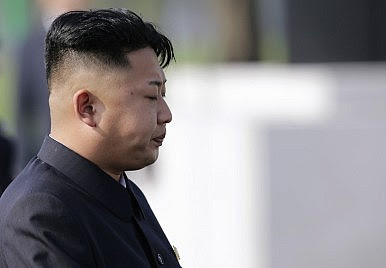
Image Credit: REUTERS/Jason LeeSYSTEM

The North Korea Regime Change Debate

A call for a policy of North Korean regime change sparks debate.
By Joseph A. Bosco
January 06, 2015
 40
 8
 0
 1
 
Richard Haass, the respected president of the Council on Foreign Relations, raised eyebrows among foreign policy elites recently when he proposed that regime change in North Korea should be the explicit aim of American foreign policy. The notion also stirred much-needed debate on broader national security considerations.
Haass’s Wall Street Journal article cogently made the strategic and humanitarian case for a collaborative campaign by Washington, Beijing, Seoul and Tokyo to arrange the end of the Kim Jong-un regime and bring peaceful unification to the Korean Peninsula.
Pyongyang’s infamous cyber aggression against Sony is only the latest straw. Its hard military power, both nuclear and conventional – coupled with its reckless rhetoric and behavior – directly threaten South Korea, Japan, and the United States. The regime’s massive human rights violations constitute a litany of crimes against humanity, causing the Security Council to deem North Korea’s oppression of its own population a threat to international peace and security.
Nothing less than regime change, Haass argues, will suffice to remove those internal outrages and external dangers. But his call for what he acknowledges is an ambitious and risky undertaking, coming as it does from an eminent leader in the foreign policy establishment, has stoked alarm among fellow scholars. One set of objections relates to the practical modalities of the Haass proposal: It offers no post-reunification plan going forward, and it potentially accords China an inappropriate role in U.S.-South Korea military cooperation.
Kori Schake of the Hoover Institute takes on the Haass concept more frontally in a Foreign Policy blog, calling it “unusually reckless” and seemingly oblivious to the probability of “catastrophic responses or the collapse of North Korea burgeoning into chaos.” Schake says the Haass argument “is premised on confidence that he understands both Chinese and Korean choices – that if only we provided the right incentives, China would flip from bolstering Pyongyang,” an approach American policymakers have tried in vain for more than a decade. She dismisses Beijing’s assertion (as I have) that it supports Pyongyang to ensure stability on the Peninsula, instead perpetuating a regime that is a major source of regional instability.
Schake astutely observes: “It is similarly plausible that China still sees a scary North Korea as useful in tying down Washington’s attention.” (I have argued that this good cop/bad cop routine enables China to be seen in Western eyes as a comparative good-faith negotiating partner and “responsible stakeholder.” The twenty-year charade is win-win for the Communist allies: China gets its international status; North Korea gets its nukes.)
Schake finds other “problems” and “major flaws” in the Haass proposal “surprising from someone who wrote so ardently about the mistakes of such wars of choice,” e.g., Iraq. Yet, the North Korea dilemma invites some rethinking of both that war and the entire body of conventional wisdom regarding intervention, regime change, and the post-World War II approach to “limited war.” In hindsight (and validation for some), Iraq II would not have been necessary in 2002 if Iraq I had achieved the needed regime change in 1990 when it could have been done more efficiently and humanely. (Yes, there would have been problems in getting full international support to extend the mission beyond reversing Saddam Hussein’s aggression in Kuwait, but that was never tried.
Similarly, the Korean people and the world would have been spared six decades of the Kim family-inflicted nightmare had the U.S.-led United Nations force made regime change the goal of that 1950s war. Nor would there likely have been a Kosovo onslaught and war in 1998 had Slobodan Milosevic and his murderous gang been dispatched during the (tragically belated) Bosnia intervention earlier in that decade. More recently, Washington’s inattention and vacillation robbed the Libyan people of the benefits Gaddafi’s overthrow could have provided them. Failure of U.S. leadership in the Syria situation again precluded timely regime change and produced the present strategic and humanitarian horrors there.
It is too easy to dismiss arguments for intervention and regime change in extreme cases of aggression and/or humanitarian outrages as mere war-mongering and reversion to Cold War thinking. Yet, it was precisely the U.S.-Soviet confrontation and the danger of nuclear war that led to the erosion of the pre-Cold War principles of total victory, unconditional surrender, and elimination of outlaw regimes. The end of America’s nuclear monopoly made those World War II strategies for Germany, Japan, and Italy implausible in direct Cold War conflicts between the United States and the Soviet Union/Russia or China.
But the understanding that neither major power would really go to the mat and risk mutual annihilation made the world safe for an increasing frequency of “limited wars” between their proxies, surrogates or allies. The carnage and suffering was anything but limited, of course, for the direct combatants’ populations in Korea, Vietnam, Bosnia, Kosovo and Syria. As long as the West keeps regime change off the table, the offending regime sees itself as having little to lose in its particular situation, in effect playing with the house’s money.
As to the “war-mongering” charge against regime change advocates, everyone is presumably against war in the abstract. All things being equal (rarely true), peace is better than war – but not if it indulges genocide, crimes against humanity, or threats of nuclear aggression (all of which are blatant violations of the U.N. Charter).
Moreover, the history of the last hundred years has taught that peace cheaply bought can lead to war dearly waged. Time and again, appeasement and looking the other way have proved counter-productive as well as morally wrong. Tolerating the violation of indispensable international principles has often only deferred war and made it bigger and costlier than it would have been.
In any event, war is not the only means to bring about decent governance and there are positive examples of successful peaceful change. Regimes can find enlightenment and reform themselves, as happened in South Korea, Taiwan and South Africa. U.S. President Barack Obama is hoping for a variation of that scenario in Cuba. Or, a combination of internal and external pressures can bring about largely peaceful regime collapse, as in the Soviet Union, Eastern Europe, and more recently, Ukraine.
Despite Schake’s concerns, Haass is not abandoning a prudent approach to regime change in North Korea. He is well aware that Western actions can have unintended consequences – but so can inaction. That is effectively what we have had for six decades during which containing rather than changing the regime has been the declared objective of U.S. policy.
But Schake is right that Haass overestimates China’s willingness to abandon its longstanding ally. That is why Western pressure needs to be applied to Beijing as well as Pyongyang. Indeed, it may well be true that regime change in North Korea will not happen until there is regime change in China, which itself is an outlier on international norms. U.S. policymakers need to devise specific non-kinetic policies, overt and covert, to encourage that result in both problematic systems.
Joseph A. Bosco is a member of the U.S.-China task force at the Center for the National Interest and a senior associate at the Center for Strategic and International Studies. He previously served as China country desk officer in the office of the secretary of Defense from 2005-2006.

Monday, January 5, 2015

Kim Jong Un's New Year Address (Juche 104)

Here is the actual translation of this year's New Year's address.  When I accessed the one from the KCNA web page (Japan server) last week it was still the 2014 version which is why I could not find the rhetoric about talks with the South.

This is the heart of the regime's new charm offensive:

Though the people-centred socialist system of our own style is the most advantageous, we do not force it on south Korea and have never done so.
The south Korean authorities should neither seek "unification of systems" that incites distrust and conflict between the north and the south nor insult the other side's system and make impure solicitation to do harm to their fellow countrymen, travelling here and there.
The north and the south, as they had already agreed, should resolve the national reunification issue in the common interests of the nation transcending the differences in ideology and system.
They should briskly hold dialogue, negotiations and exchanges and make contact to relink the severed ties and blood vessels of the nation and bring about a great turn in inter-Korean relations.
It is the unanimous desire of the fellow countrymen for both sides to stop fighting and pave a new way for reunification by concerted efforts. They should no longer waste time and energy over pointless arguments and trifling matters but write a new chapter in the history of inter-Korean relations.
Nothing is impossible if our nation shares one purpose and joins efforts. On the road for reunification the north and the south had got such charter and great programme for reunification as the July 4 Joint Statement, the historic June 15 Joint Declaration and the October 4 Declaration, thus demonstrating to the whole world the nation's determination and mettle to reunify the country.
We think that it is possible to resume the suspended high-level contacts and hold sectoral talks if the south Korean authorities are sincere in their stand towards improving inter-Korean relations through dialogue.
And there is no reason why we should not hold a summit meeting if the atmosphere and environment for it are created.
In the future, too, we will make every effort to substantially promote dialogue and negotiations.
Kim Jong Un's New Year Address
Pyongyang, January 1 (KCNA) -- Kim Jong Un, first secretary of the Workers' Party of Korea, first chairman of the National Defence Commission of the DPRK and supreme commander of the Korean People's Army, made a New Year address for 2015.
The following is its full text:

Dear comrades!

Having seen out 2014, a year in which we clearly demonstrated the spirit and might of the great DPRK that advances by leaps and bounds with confidence in victory, we are seeing in the hope-filled new year 2015.

Reflecting the boundless loyalty of all the service personnel and people, I would like to pay the highest tribute and offer New Year greetings to President Kim Il Sung and General Kim Jong Il, the eternal leaders of our people and the sun of Juche.

I extend New Year greetings to the service personnel and people who are striving with devotion for the dignity and prosperity of the country with revolutionary faith and patriotic enthusiasm, and I wish the families throughout the country would overflow with warm affection and our lovely children would have a brighter future.
My New Year greetings go also to the compatriots in the south and abroad who are fighting for national concord and reunification and to the progressive peoples of the world and other foreign friends who aspire after independence and peace.

Last year was a year of brilliant triumph in which the foundations for hastening final victory on all fronts of building a thriving nation were consolidated firmly and the invincible might of the DPRK was demonstrated under the leadership of the Party.

Last year the harmonious whole of the Party and the masses of the people was solidified and the purity and might of the revolutionary ranks strengthened.
The ardent yearning of our service personnel and people for the President and the General became intenser as the days went by and they fully manifested their passionate loyalty and pure sense of moral obligation to translate into reality the great leaders' plans and wishes. Our Party's politics of love for the people and younger generation and its policy of attaching importance to science and education were embodied in reality and thereby the people's trust in the Party deepened and our single-hearted unity hardened. Amid the drive for carrying on education in revolutionary traditions through the study tour of the revolutionary battle sites in the Mt. Paektu area, the entire army and the whole society came to pulsate with the spirit and mettle of Paektu and bubble with the conviction and will to carry through the sacred revolutionary cause of Juche.

Last year the fighting efficiency of the People's Army was increased remarkably and national defence capability was built up.

As the army conducted political and ideological work in a positive manner and stoked the flames of training under combat conditions, all its officers and men and units of services and arms became strong in ideas and faith and prepared as an invincible army capable of discharging operational and combat missions proficiently in any circumstances and conditions. Iron military discipline was established in the entire army and unprecedented successes were made in the improvement of soldiers' living. The defence industry sector developed and completed various means of military strike of our style to make a tangible contribution to the qualitative growth of the revolutionary armed forces.

Last year we made great progress in the building of a socialist economic giant and civilized nation by the joint operation of the army and people.

Even in the difficult situation and adverse conditions last year, an upswing was brought about in production in different sectors including agriculture, fishery and chemical and coal-mining industries, opening up bright prospects for the building of an economic giant and improvement of the people's living standards. The construction sector kindled the fierce flames for creating the Korean speed to build many monumental structures that serve as standards and models of Juche-oriented architecture including the Wisong Scientists Dwelling District, apartment houses for lecturers of Kim Chaek University of Technology, Yonphung Scientists Holiday Camp and October 8 Factory, thereby actually demonstrating the looks of the DPRK that is realizing its beautiful ideals. The service personnel who engaged in the building of a thriving country achieved breakthroughs in production, construction and modernization and created excellent model units in the spirit of devotedly implementing the Party's policies and the spirit of match-for-a-hundred combatants.

Our sportspeople undauntedly fought by our own style of tactics in the 17th Asian Games and world championships to exalt the honour of the country and greatly encourage the service personnel and people who were out in the struggle to defend socialism.

All the victories and priceless successes we achieved last year are a brilliant result of the Party's wise leadership and of the burning patriotic loyalty and self-sacrificing struggle of all the service personnel and people rallied firmly behind the Party.
I extend heartfelt thanks to all the service personnel and people who made a contribution to glorifying last year as a year of proud feats and changes by waging an unyielding struggle with a steadfast faith in the revolutionary cause of Juche and the revolutionary cause of Songun.
Comrades!

The new year 2015 will be a year of great significance, in which we will mark the 70th anniversaries of national liberation and founding of the Workers' Party of Korea.
Greeting this significant year, our people are looking back with great pride and dignity upon the glorious 70-year history of our Party and homeland which have achieved shining victories under the wise leadership of the President and the General; they are full of confidence and optimism with a determination to follow the Party and achieve final victory in the Juche revolution pioneered on Mt. Paektu.

This year we should display the revolutionary spirit and mettle of Paektu to scathingly thwart the challenges and manoeuvres by hostile forces and score a signal success in the struggle to defend socialism and on all fronts of building a thriving nation. By doing so, we should celebrate the 70th anniversaries of national liberation and founding of the Party as revolutionary, auspicious events.

Upholding the slogan "Let us all turn out in the general offensive to hasten final victory in the revolutionary spirit of Paektu!" all the service personnel and people should charge dynamically towards the venue of grand October celebrations. Bearing in mind the soul and mettle of Paektu, we should become honourable victors in the general offensive to exalt the dignity of our socialist country and promote its prosperity on the strength of ideology, arms and science and technology.

This year we will further consolidate our country's invincible might as a socialist political and ideological power.

We should invariably hold up the President and the General forever as the sun of Juche, staunchly championing and adding eternal brilliance to their immortal revolutionary exploits.

In this year of the 70th anniversary of the Party, which organizes and guides all victories of our people, we should set up a new milestone in improving its leadership ability and fighting efficiency.

We should steadily intensify the work of establishing the Party's monolithic leadership system to make the whole Party share ideology with the Party Central Committee, breathe the same breath as it and keep pace with it. All Party organizations should maintain implementing the Party's lines and policies as the major line of Party work, and carry every of them to completion unconditionally.

We should ensure that the people-first principle runs through the whole of Party work as appropriate for its nature as a motherly party to make the climate of respecting, loving and depending on them pervade it and Party work focus on improving their living standards. All the organizations and officials of the Party should eliminate abuses of power and bureaucratism, and take warm care of the people and lead them properly to make sure that the latter trust and rely on it as they would do their mothers and throw in their lot with it.

We should hold fast to ideology as the Party's powerful weapon and make an ideological offensive to consolidate the ideological position of our revolution rock-solid. We should promote education in the greatness of the leaders, Kim Jong Il's patriotism, faith, anti-imperialist and class consciousness and morality to train all Party members, service personnel and other working people into staunch fighters of the Songun revolution and make them raise the fierce flames of patriotic loyalty, creation and innovation at all posts in national defence and for building a thriving nation.
This year we should further demonstrate our country's might as a military power by bringing about a fresh turn in building revolutionary armed forces and enhancing its defence capability.

The People's Army should thoroughly establish the Party's monolithic command system across the entire army and vigorously conduct the movement of winning the titles of O Jung Hup-led 7th Regiment and Guards Unit. Thus it should implement to the letter the Party's four-point strategic line and three major tasks for increasing military strength. It should effect a turnaround in improving the quality of training by eliminating formalism and stereotyped patterns in combat and political training and updating its contents and methods. It should maintain full combat readiness so that it can repulse any provocation by the enemy in one stroke. By bringing about a radical turn in its supply service, it should provide soldiers with better living conditions and make all its battalions and companies elite combat ranks and their dear villages and homes that adjoin the yard of the office of the Party Central Committee. In the future, too, it should be a pioneer and example in the struggle to implement the Party's ideas and safeguard its policies in pursuance of its plan for building a thriving nation.

In line with the requirements of the prevailing situation, the officers and men of the Korean People's Internal Security Forces should sharpen the sword for defending the leader, system and people, and members of the Worker-Peasant Red Guards and the Young Red Guards should conduct combat and political training in a real-war atmosphere, thereby beefing up their combat efficiency and getting fully prepared for an all-people resistance so that they can defend their own provinces, counties and villages by themselves.

By carrying out the Party's line of promoting the two fronts simultaneously, the defence industry sector should step up the efforts to make the munitions production Juche-oriented, modern and scientific and proactively develop and perfect powerful cutting-edge military hardware of our own style.

This year we should give definite precedence to science and technology and effect an upswing in building a socialist economic giant and civilized nation.

It is a determination and will of our Party to rapidly develop all sectors and build a people's paradise by dint of science and technology. The front of science should forcefully rush ahead in the vanguard of a thriving socialist country building, thereby foiling the enemy's pernicious moves for sanctions and encouraging all the economic sectors to make rapid headway on the strength of the high-running spirit of independence and of science and technology. The scientific research sector should wage a brisk drive for going beyond the cutting edge to produce many valuable findings conducive to developing the economy, increasing defence capability and improving the people's living standards. Regarding science and technology as their lifeline, all sectors and all units should step up modernization and introduction of information technology in our style, raise the scientific and technological level of officials and working people and vigorously carry on all undertakings by relying on science and technology.

We should make maximum use of the existing foundations and all potentials of the self-supporting economy, so as to bring about a turn in improving the people's living standards and building an economic giant.

In this significant year we should bring about an upturn in improving the people's living standards.

We should resolve the food problem of the people and improve their dietary life on a higher level with agricultural production, animal husbandry and fishing as the main thrusts.

The agricultural sector should overcome unfavourable natural conditions and overfulfil the cereals production plan by actively introducing scientific farming methods including water-saving farming, supplying sufficient amounts of farming materials and organizing and guiding production in conformity with actual conditions. We should put the production at stockbreeding and fish-farming bases, greenhouses and mushroom production bases built across the country on a regular footing and ensure that the people benefit from them. True to the Party's plan, we should dynamically speed up the building of the stockbreeding bases in the Sepho area and make steady preparations for livestock production and their operation. By emulating the working spirit of the People's Army which made a new history of "sea of gold," the fishing sector should drastically bolster up the fishing industry and land a huge haul, thus supplying a large amount of fish to enrich the people's diet.

Fully aware of the responsibility and mission it assumes for the people, the light industry sector should work out a strategy for fending for itself and put production at central and local light-industry factories on normal track, so as to supply our people, including students and children, with larger amounts and various kinds of quality consumer goods, school things and children's food.

We should direct great efforts to relieving the shortage of electricity, a major source of power of the national economy, and strive to shore up its vanguard sectors and key industries.

We should increase coal and electricity production in the mettle displayed in bringing about innovations in the coal-mining industry and thermal power stations last year and meet the immediate demand for electricity by waging a campaign to economize on electricity to the maximum, while taking realistic measures to resolve the electricity problem in a prospective way. We should develop metal, chemical and other basic industries and brace rail transport by relying on our own technology and resources and thus ensure that all other economic sectors smoothly progress full of vigour. We should foster external economic relations in a multilateral way and accelerate the projects for economic development zones including the Wonsan-Mt. Kumgang international tourist zone.

We should raise a stronger wind of creating the Korean speed in the construction sector so as to build power stations, factories, educational and cultural establishments and dwelling houses as befit the monumental edifices in the era of the Workers' Party. By completing with credit the major construction projects, including the multi-tier power stations on the Chongchon River, Kosan Fruit Farm and Mirae Scientists Street, we should splendidly adorn the venue of grand October celebrations.

The whole Party, the entire army and all the people should, as they carried out rehabilitation after the war, turn out in the campaign to restore the mountains of the country so as to turn them into "mountains of gold" thickly wooded with trees. All the sectors should invariably push ahead with the work of afforesting and landscaping the whole country and turning it into orchard, and build Pyongyang, provinces, cities, county seats, workplaces and villages in a more cultured way and maintain and manage them on a regular basis.

All the economic sectors and units should make positive efforts to increase production, improve the quality of goods and enhance their competitive edge by working out proper strategies for business operation and enterprise management and tapping all possible reserves and potentialities. All the factories and enterprises should wage a dynamic struggle to get rid of the proclivity to import and ensure the domestic production of raw and other materials and equipment, while sprucing themselves up by taking their cue from the model units put forward by the Party.

The Cabinet and other state organs for economic guidance should make proactive efforts to establish the economic management method of our style as demanded by the reality so that all the economic organs and enterprises can conduct their business activities creatively on their own initiative. Party organizations at all levels should throw their full weight behind the work of improving economic management in order to make sure that it is done as intended by the Party.

A vigorous spur should be given to the building of a civilized socialist nation.
We should bring about a radical improvement in education in the new century by arousing state and social interest in the role of officials in this sector and educational work, thereby making fresh progress in making all the people well versed in science and technology and developing ours into a talented nation.

The whole country should bubble with enthusiasm for sports and our sportspeople should fly higher the flag of the Republic at international games to open up bright prospects for building a sporting power.

The sector of art and literature should do away with stagnation and produce larger numbers of contemporary masterpieces which inspire the masses to further efforts, and the public health sector should improve the hygienic and anti-epidemic work and preventive and curative medical care and boost pharmaceutical production.

We should make sure that national sentiments and noble and beautiful lifestyle prevail across society, and press on with national heritage conservation as a patriotic undertaking involving the whole country and all the people.

In order to successfully carry out the enormous tasks for this year all the officials, Party members, service personnel and other working people should live and work in the revolutionary spirit of Paektu, the spirit of the blizzards of Paektu.

The spirit is, in essence, an unyielding offensive spirit of braving obstacles and difficulties and a staunch fighting spirit of rising up no matter how often one may fall and fighting it out. The hearts of all our service personnel and people should beat with the confidence in victory and indomitable spirit cherished by the anti-Japanese revolutionary forerunners who fought death-defyingly for their country and people and won victory against all odds. All the officials, Party members and other working people should enter the venue of grand October celebrations proudly with gifts they have prepared by dint of the revolutionary spirit of Paektu and through creative struggle.
The whole country should overflow with the spirit of patriotic devotion with which to hold dear and add brilliance to our own things.

Holding dear and adding brilliance to our own things is just the Korean-nation-first spirit and the genuine patriotism that exalts the dignity of our country, our motherland, and hastens its prosperity. We should value and add lustre to all the assets the preceding generations of the revolution created on this land at the cost of their blood and sweat under the guidance of the Party and the leaders, and create and develop everything in our own way with a high sense of national pride and by relying on our strength, technology and resources.

Officials, leading participants in the revolution, should be the standard-bearers and vanguard fighters in the ongoing general offensive.

They should faithfully serve the country and people for their prosperity and well-being with a noble outlook on patriotism and firm preparedness for devoted service and, shouldering heavy burdens by themselves, make redoubled efforts in the van of the masses. With a full understanding of the Party's ideas and intentions, officials should go deep among the masses and rouse them to carry through its lines and policies unconditionally at the cost of their lives. They should be fully accountable to the Party and the state for the work in their sectors and units, eliminate defeatism, self-preservation and expediency and do everything in an innovative and scientific way.
Seventy years have passed since our nation was divided by outside forces.
In those decades the world has made a tremendous advance and the times have undergone dramatic changes, but our nation has not yet achieved reunification, suffering the pain of division. It is a deplorable fact known to everyone and it is lamentable to everyone. No longer can we bear and tolerate the tragedy of national division that has continued century after century.

Last year we put forward crucial proposals for improved inter-Korean relations and national reunification and made sincere efforts for their implementation. Our efforts, however, could not bear due fruit owing to the obstructive moves by the anti-reunification forces within and without; instead the north-south relations have been on a headlong rush to aggravation.

However complicated the situation may be and whatever obstacles and difficulties may stand in our way, we should unfailingly achieve national reunification, a lifetime wish of the President and the General and the greatest desire of the nation, and build a dignified and prosperous reunified country on this land.

"Let the whole nation join efforts to open up a broad avenue to independent reunification in this year of the 70th anniversary of national liberation!"-this is the slogan of struggle the entire Korean nation should hold up.

We should remove the danger of war, ease the tension and create a peaceful environment on the Korean peninsula.

The large-scale war games ceaselessly held every year in south Korea are the root cause of the escalating tension on the peninsula and the danger of nuclear war facing our nation. It is needless to say that there can be neither trustworthy dialogue nor improved inter-Korean relations in such a gruesome atmosphere in which war drills are staged against the dialogue partner.

To cling to nuclear war drills against the fellow countrymen in collusion with aggressive outside forces is an extremely dangerous act of inviting calamity.
We will resolutely react against and mete out punishment to any acts of provocation and war moves that infringe upon the sovereignty and dignity of our country.

The south Korean authorities should discontinue all war moves including the reckless military exercises they conduct with foreign forces and choose to ease the tension on the Korean peninsula and create a peaceful environment.

The United States, the very one that divided our nation into two and has imposed the suffering of national division upon it for 70 years, should desist from pursuing the anachronistic policy hostile towards the DPRK and reckless acts of aggression and boldly make a policy switch.

The north and the south should refrain from seeking confrontation of systems while absolutizing their own ideologies and systems but achieve great national unity true to the principle of By Our Nation Itself to satisfactorily resolve the reunification issue in conformity with the common interests of the nation.

If they try to force their ideologies and systems upon each other, they will never settle the national reunification issue in a peaceful way, only bringing confrontation and war.
Though the people-centred socialist system of our own style is the most advantageous, we do not force it on south Korea and have never done so.

The south Korean authorities should neither seek "unification of systems" that incites distrust and conflict between the north and the south nor insult the other side's system and make impure solicitation to do harm to their fellow countrymen, travelling here and there.

The north and the south, as they had already agreed, should resolve the national reunification issue in the common interests of the nation transcending the differences in ideology and system.

They should briskly hold dialogue, negotiations and exchanges and make contact to relink the severed ties and blood vessels of the nation and bring about a great turn in inter-Korean relations.

It is the unanimous desire of the fellow countrymen for both sides to stop fighting and pave a new way for reunification by concerted efforts. They should no longer waste time and energy over pointless arguments and trifling matters but write a new chapter in the history of inter-Korean relations.

Nothing is impossible if our nation shares one purpose and joins efforts. On the road for reunification the north and the south had got such charter and great programme for reunification as the July 4 Joint Statement, the historic June 15 Joint Declaration and the October 4 Declaration, thus demonstrating to the whole world the nation's determination and mettle to reunify the country.

We think that it is possible to resume the suspended high-level contacts and hold sectoral talks if the south Korean authorities are sincere in their stand towards improving inter-Korean relations through dialogue.

And there is no reason why we should not hold a summit meeting if the atmosphere and environment for it are created.

In the future, too, we will make every effort to substantially promote dialogue and negotiations.

The entire Korean nation should turn out together in the nationwide movement for the country's reunification so as to glorify this year as a landmark in opening up a broad avenue to independent reunification.

Last year, in the international arena, hostilities and bloodshed persisted in several countries and regions due to the imperialists' outrageous arbitrariness and undisguised infringement upon their sovereignty, which posed a serious threat to global peace and security.

Especially, owing to the United States' extremely hostile policy aimed at isolating and suffocating our Republic, the bulwark of socialism and fortress of independence and justice, the vicious cycle of tension never ceased and the danger of war grew further on the Korean peninsula.

The United States and its vassal forces are resorting to the despicable "human rights" racket as they were foiled in their attempt to destroy our self-defensive nuclear deterrent and stifle our Republic by force.

The present situation, in which high-handedness based on strength is rampant and justice and truth are trampled ruthlessly in the international arena, eloquently demonstrates that we were just in our efforts to firmly consolidate our self-reliant defence capability with the nuclear deterrent as its backbone and safeguard our national sovereignty, the lifeblood of the country, under the unfurled banner of Songun.
As long as the enemy persists in its moves to stifle our socialist system, we will consistently adhere to the Songun politics and the line of promoting the two fronts simultaneously and firmly defend the sovereignty of the country and the dignity of the nation, no matter how the international situation and the structure of relations of our surrounding countries may change. On the basis of the revolutionary principles and independent stand, we will expand and develop foreign relations in a multilateral and positive way, giving top priority to the dignity and interests of the country.

Our Party and the government of our Republic will solidify in every respect the bond and solidarity with the world's progressive peoples who love peace and aspire after independence and justice, and strive to develop good neighbourly relations with all the countries that respect our national sovereignty and are friendly to us.

No force in the world can check the advance of our army and people who are rushing forward like the blizzards of Paektu filled with rock-firm revolutionary faith and mettle of invincibility under the leadership of the great Party, and final victory undoubtedly belongs to us.

Let us all staunchly strive to glorify this significant year as a year of great victories and revolutionary, auspicious events, rallied more closely behind the Party and singing aloud the march of final victory.

Greeting the hope-filled new year 2015, I wish all the families across the country happiness.

Copyright (C) KOREA NEWS SERVICE(KNS) All Rights Reserved.

Friday, January 2, 2015

TREASURY IMPOSES SANCTIONS AGAINST THE GOVERNMENT OF THE DEMOCRATIC PEOPLE’S REPUBLIC OF KOREA

I suppose this is part of our proportional response the President said would we take (and I only hope it is part of the response as we need more).  I am pleased to see this as it highlights the illicit activity of the regime going on around the world. However sanctions do little against north Korea and really do not put sufficient pressure on the regime or Kim Jong-un personally.  As I wrote here (http://maxoki161.blogspot.com/2014/12/brief-thoughts-on-responses-to-north.html)  I would like to see concrete action taken against the north's global illicit network by having nations enforce their laws and either arresting north Koreans conducting illegal activity or expelling them if they are abusing their diplomatic status to gain hard currency for the Kim Family Regime through their illicit activities.  We should really use our diplomatic actions and intelligence and law enforcement contacts to share information and ask for international support in stopping north Korean counterfeiting (money and drugs), illicit drug trafficking, and weapons proliferation.  In addition, I do not think the regime will feel sufficient economic pain through sanctions.  That will not happen until we implement another action such as we did with Banco Delta Asia. To have any chance of influencing Kim Family Regime behavior we have to go after their money.  Sanctions, while important in sending an international message, are just not strong enough to influence regime behavior.


Inline image 1


U.S. DEPARTMENT OF THE TREASURY
OFFICE OF PUBLIC AFFAIRS

EMBARGOED FOR 2:00 P.M. EST: January 2, 2015
CONTACT: Hagar Chemali, Treasury Public Affairs (202) 622-1343

TREASURY IMPOSES SANCTIONS AGAINST
THE GOVERNMENT OF THE DEMOCRATIC PEOPLE’S REPUBLIC OF KOREA

Action Targets the Government of North Korea in Response to Recent Provocations

WASHINGTON – In response to the Government of the Democratic People’s Republic of Korea’s numerous provocations, particularly the recent cyber-attack targeting Sony Pictures Entertainment and the threats against movie theaters and moviegoers, President Obama today signed an Executive Order (E.O.) authorizing the imposition of sanctions against the Government of North Korea and the Workers’ Party of Korea.  This step reflects the ongoing commitment of the United States to hold North Korea accountable for its destabilizing, destructive and repressive actions, particularly its efforts to undermine U.S. cyber-security and intimidate U.S. businesses and artists exercising their right of freedom of speech.

Pursuant to the authorities of this new E.O., Treasury today has designated three entities and 10 individuals for being agencies or officials of the North Korean government.

“Today’s actions are driven by our commitment to hold North Korea accountable for its destructive and destabilizing conduct.  Even as the FBI continues its investigation into the cyber-attack against Sony Pictures Entertainment, these steps underscore that we will employ a broad set of tools to defend U.S. businesses and citizens, and to respond to attempts to undermine our values or threaten the national security of the United States,” said Secretary of the Treasury Jacob J. Lew.  “The actions taken today under the authority of the President’s new Executive Order will further isolate key North Korean entities and disrupt the activities of close to a dozen critical North Korean operatives.  We will continue to use this broad and powerful tool to expose the activities of North Korean government officials and entities."

Targeting the Government of North Korea and the Workers’ Party of Korea

The E.O. signed today escalates financial pressure on the Government of North Korea, including its agencies, instrumentalities, and controlled entities, by authorizing targeted sanctions that would deny designated persons access to the U.S. financial system and prohibit U.S. persons from engaging in transactions or dealings with it.

The E.O. authorizes the Secretary of the Treasury, in consultation with the Secretary of State, to apply sanctions against officials of the Government of North Korea and the Workers’ Party of Korea, and persons determined to be owned or controlled by, or acting for or on behalf of, or to have provided material support for the Government of North Korea, Workers’ Party of Korea, or any other person whose property and interests in property are blocked pursuant to the Order.

Designations under the New E.O.

The following three entities are designated under the E.O. signed by the President today for being controlled entities of the Government of North Korea:

·         Reconnaissance General Bureau (RGB): RGB is North Korea’s primary intelligence organization and is involved, inter alia, in a range of activities to include conventional arms trade proscribed by numerous United Nations Security Council Resolutions. RGB was previously listed in the annex to E.O. 13551 on August 30, 2010.  RGB is responsible for collecting strategic, operational, and tactical intelligence for the Ministry of the People’s Armed Forces. Many of North Korea’s major cyber operations run through RGB.

·         Korea Mining Development Trading Corporation (KOMID): KOMID is North Korea’s primary arms dealer and main exporter of goods and equipment related to ballistic missiles and conventional weapons.  KOMID, a North Korean state-owned entity, was previously listed in the annex to E.O. 13382 on July 1, 2005 for its role in North Korea’s proliferation of weapons of mass destruction.  It was also sanctioned by the United Nations in April 2009.  KOMID has offices in multiple countries around the world and facilitates weapons sales for the North Korean government.

·         Korea Tangun Trading Corporation is subordinate to the Second Academy of Natural Sciences and is primarily responsible for the procurement of commodities and technologies to support North Korea's defense research and development programs, including materials that are controlled under the Missile Technology Control Regime (MTCR) or the Australia Group.  Tangun Trading Corporation was designated by the Department of State pursuant to E.O. 13382 in September 2009 and was designated by the United Nations in 2009.  The identifier information for this designated entity is also being updated to include several aliases it uses to operate internationally.  The new aliases for Korea Tangun Trading Corporation include Ryung Seng Trading Corporation, Ryungseng Trading Corporation, and Ryungsong Trading Corporation.

The following 10 individuals are designated under the E.O. signed by the President today for their status as officials of the North Korean government:

·         Kil Jong Hun and Kim Kwang Yon are officials of the North Korean government and represent the southern African interests of KOMID. Kil JongHun is KOMID’s Representative in Namibia and an official of the NorthKorean government.

·         Jang Song Chol is a KOMID representative in Russia and an official of the North Korean government.  He is working with individuals in Sudan who are procuring materials from him.

·         Yu Kwang Ho is an official of the North Korean government.

·         Kim Yong Chol is a KOMID Representative in Iran and an official of the North Korean Government.

·         Jang Yong Son is a KOMID Representative in Iran and an official of the North Korean government.

·         Kim Kyu is the KOMID External Affairs Officer and an official of the NorthKorean government.

·         Ryu Jin and Kang Ryong are KOMID officials operating in Syria and areofficials of the North Korean government.

·         Kim Kwang Chun is a Korea Tangun Trading Corporation representative inShenyang, China and an official of the North Korean government.

For identifier information on the individuals and entities designated today, please click here.

Thursday, January 1, 2015

Park calls for military readiness amid tensions with N. Korea

Although there are some who find this unhelpful in terms of engagement with north Korea and would in fact advocate stopping alliance exercises in order to bring north Korea to the negotiating table and believe that canceling alliance exercises would change north Korean behavior.

However, I think we should understand (and fortunately President Park does) that trustpolitik and the Dresden initiative rest on the foundation of a strong ROK/US alliance because only that can guarantee the security of the Korean peninsula.  We cannot bet on north Korean words and agreements because since 1992 and the ARNE (as well as going back to 1950 when the north called for talks at Kaesong about a month before June 25, 1950) the north's actions have always been counter to their words and agreements.

A strong military provide President Park the flexibility to execute a broad range of policies that include engagement and negotiation.

Park calls for military readiness amid tensions with N. Korea

khclose

Published : 2015-01-01 09:24
Updated : 2015-01-01 09:24
President Park Geun-hye called on the military Thursday to maintain its readiness, saying robust security is a must to lay the groundwork for potential unification with North Korea.
  
"We should end the history of division by putting an end to the Cold War on the Korean Peninsula," Park said in a New Year's message to the country's 650,000-strong military.
  
The Korean Peninsula was divided into the capitalistic South and communist North after its liberation from Japan's 1910-45 colonial rule.
  
The comments came three days after South Korea proposed that the two rival Koreas hold ministerial talks in January to discuss such bilateral issues as the reunion of families separated by the war.
  
Still, it remains unclear whether North Korea will accept South Korea's offer.
  
She also expressed hope that the military will receive public trust and love by establishing a new military culture, remarks apparently aimed at boosting morale in the military.
  
South Korea's military came under fire last year over a series of deaths blamed on a deep-rooted culture of abuse and bullying in barracks.
  
In June, an Army sergeant who had been bullied by his comrades went on a shooting rampage near the border with North Korea, killing five people and wounding seven others.
  
All able-bodied South Korean men must carry out compulsory military service for about two years in a country facing North Korea across the heavily fortified border. (Yonhap)

CHINESE SPECIAL OPERATIONS FORCES: NOT LIKE “BACK AT BRAGG”

One of the very few credible articles on Chinese SOF (The only other that I can recall was by Dean Cheng in Special Warfare Magazine a couple of years ago. http://www.soc.mil/swcs/swmag/archive/SW2503/SW2503TheChinesePeoplesLiberationArmy.html).  

 In addition to the excerpts highlighted below (and I recommend reading the whole article) I would highlight the section on psychological operations/information warfare and note that these activities, including the "Three Warfares" are not part of SOF but controlled by the General Political Department.  I think this is an illustration of the importance that China places on these activities.  (we should recall the history of how US PSYOP ended up in USSOCOM in 1987 - GEN Lindsay (in addition to recognizing the historical and important linkage of psychological warfare and unconventional warfare) believed that failure to incorporate PSYOP into USSOCOM would have led to all US PSYOP capabilities placed in the Reserve Component and we would have lost important PSYOP capabilities for the nation.)  The Chinese on the other hand place such priority on these activities that they are controlled (and synchronized) at the national level.

Excerpt:

Despite its early history as a guerilla organization, the PLA does not include irregular and unconventional warfare among the types of campaigns the force may be assigned. Special operations are an “important campaign activity” to be integrated into operations along with information warfare, firepower, maneuver, and psychological warfare capabilities. “Campaign special operations” are defined in the textbook The Science of Campaigns as
irregular operational activities conducted by specially formed, trained and equipped crack units (and small units) using special warfare to achieve specific campaign and strategic goals. The main purpose of its objectives are to assault enemy vital targets, paralyze enemy operational systems, reduce enemy operational capabilities, and interfere, delay, and disrupt enemy operational activities to create favorable conditions for main force units.
SOF units concentrate on special reconnaissance, raids, sabotage, and harassment while other non-SOF units conduct most special technical warfare tasks such as computer network attack.
And we should heed the message about mirror imaging SOF. Dennis makes an important contribution by comparing Chinese SOF missions with the US military Title 10 SOF mission
s
.

PLA SOF units and capabilities are not a black box to outside observers as Chinese SOF units frequently interact with foreign counterparts. For example, PLA and PAP SOF personnel and units have participated in numerous training exercises with foreign militaries, special operations competitions, and in-country training at foreign schools. Chinese SOF teams often have had excellent results in international competitions. As a result, Chinese SOF units have demonstrated their capabilities in many types of small unit commando-type direct action and reconnaissance missions, the first two Title X core SOF activities.
Though most analysts assume Chinese SOF would be used in Taiwan contingency operations (including support to and by “Fifth Column” fighters already on the island), there is little open source evidence that SOF units are organized or trained to conduct Title X unconventional warfare activities. Likewise, though the PLA provides training for foreigners in its system of schools in China, it does not appear to have recent experience in overseas foreign internal defense activities. No PLA SOF units are known to be organized and tasked similar to U.S. Army Special Forces (“Green Beret”) units.
The PLA also does not have units equivalent to U.S. Civil Affairs units. Most national-level civil affairs operations conducted by the PLA requiring intergovernmental coordination fall under the purview of the General Staff and General Political Departments and are domestically oriented. PLA headquarters are part of the local government structures from the provincial to the county levels of government and commanders and staffs of these headquarters routinely work with their civilian counterparts. However, when it comes to governance functions, local civilian government and party officials are in control while local PLA officers focus on military matters. SOF units would not be involved in these functions.


CHINESE SPECIAL OPERATIONS FORCES: NOT LIKE “BACK AT BRAGG”

January 1, 2015 · in 
The PLA’s special forces: secrets revealed,” promised Want China Times, a Taiwan-based English-language website. The article describes China’s “10 major special operations forces, each with its own unique characteristics and code names” and was based on a translation of an earlier blog posting on the PLA Daily website with photos and descriptions of several People’s Liberation Army (PLA) and People’s Armed Police (PAP) special operations units.
In fact, little in the article was new and no real secrets were revealed. Over the past decade, the official Chinese military media, both in Chinese and English, have paid copious attention to Chinese special operations forces (SOF). Based on this evidence, much more can be said about these units, their missions, and capabilities.
Unsurprisingly, Chinese SOF units are quite different from their U.S. counterparts and demonstrate most often capabilities similar to those of U.S. Army Ranger units. In particular, Chinese SOF units lack many of the dedicated special mission support capabilities found in the U.S. military.
Unfortunately, by the repeated use of the terms “special operations” and “SOF” some foreign readers might assume Chinese SOF units are like ours. In other words, readers might assume Chinese SOF are tasked to perform theten Title X SOF core activities defined by the U.S. Congress (direct action, strategic reconnaissance, unconventional warfare, foreign internal defense, civil affairs operations, counterterrorism, military information support operations [formerly known as psychological operations], humanitarian assistance, theater search and rescue, and activities specified by the president or secretary of defense). According to publicly available PLA doctrine, many U.S. SOF Core Activities are not included among PLA SOF missions.
This essay outlines the structure and doctrine of the Chinese armed forces involved in special operations and discusses their capabilities in each of the ten core activities based solely on information from Chinese sources. But first it is necessary to put the Chinese armed forces into the context of the entire government security structure.
The Chinese Security Apparatus
(Continued at the link below)

Giving Tuesday Recommendations

  Dear Friends,  I do not normally do this (except I did this last year and for the last few years now, too) and I certainly do not mean to ...