Showing posts with label sanctions. Show all posts

Monday, March 7, 2016

A Strategic Strangulation Campaign for North Korea: Is the International Community Ready for What May Come Next?

E-Notes

A Strategic Strangulation Campaign for North Korea: Is the International Community Ready for What May Come Next?

David S. Maxwell is the Associate Director of the Center for Security Studies in the Edmund A. Walsh School of Foreign Service at Georgetown University. He served in the US Army for 30 years retiring as a Special Forces Colonel.
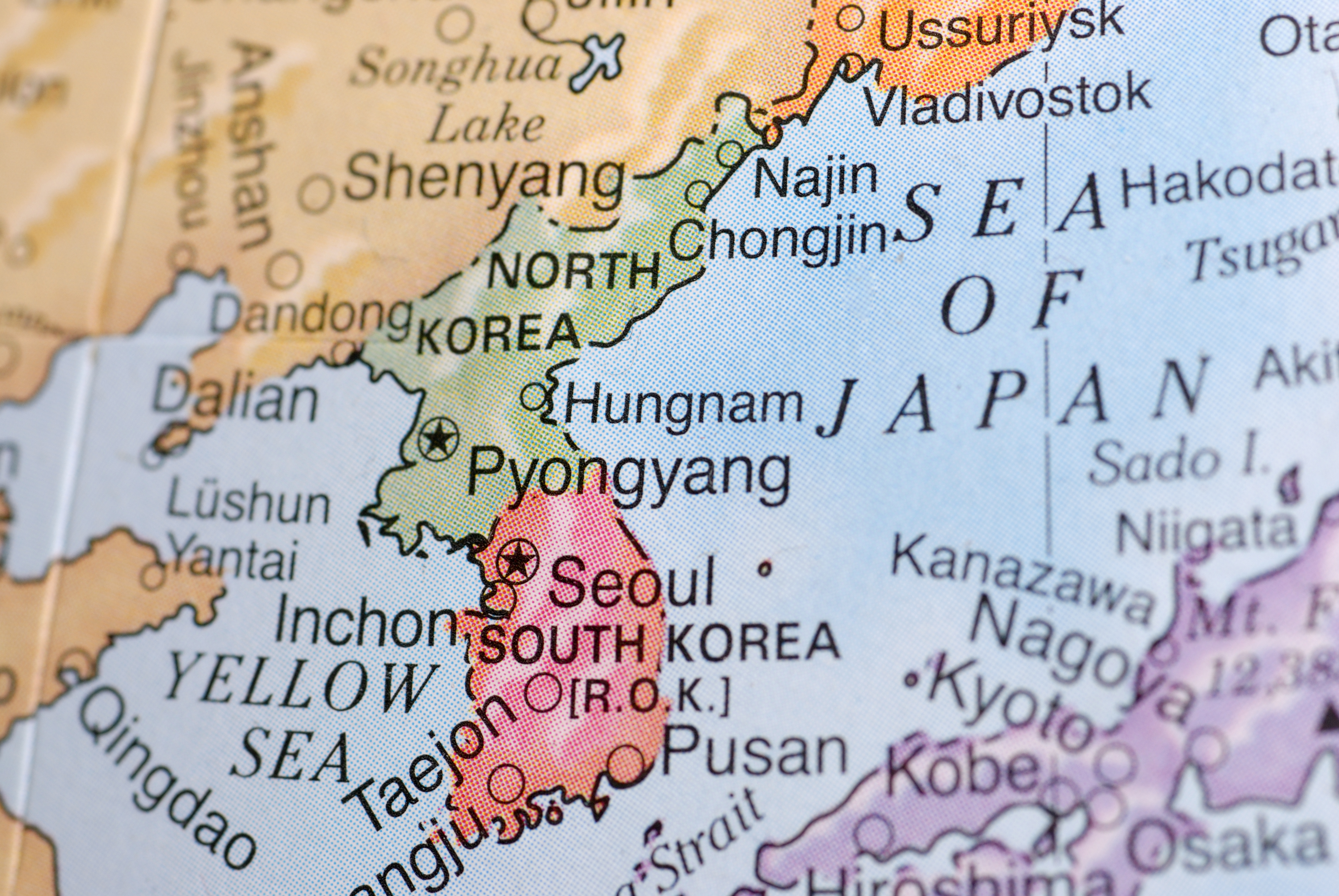
North Korea Map

The United Nations Security Council passed what has been called the toughest sanctions regime (UNSCR 2270) against North Korea in response to its nuclear weapons program and the threat it poses to the Republic of Korea, Japan, the United States, and the international community.  Has the UN and the international community, to include China and Russia, reached the breaking point over the behavior of Kim Jong-un and his threat to regional stability as well as the crimes against humanity being perpetrated against the 25 million Korean people in the north living under the yoke of brutal oppression that surpasses anything experienced in the 20th and 21st centuries from Hitler to Mao to Pol Pot?  If so, is the international community ready for what comes next?
Kim Jong-un appears to be taking this seriously and has already responded; within hours after the UN Security Council approved the resolution the military launched projectiles into the East Sea.  Kim Jong-un has stated that he is now making his nuclear weapons ready for use.  As we have long known, he has no intention of giving up his nuclear weapons program as he believes it is key to his survival and to his ability to deter external threats.  His directive to make his nuclear weapons ready is an apparent doubling down.
The sanctions regime has the potential to affect significantly the regime elite and the North Korean Peoples Army.  From aviation fuel to Rolex watches to financial actions to having all shipping into and out of North Korea inspected for compliance, these sanctions may cause three major effects if they are actually enforced by the international community.  First, the best case and desired objective is that the Kim Family Regime will change its behavior and become a responsible member of the international community.  This is highly unlikely given the nature of the regime and past history.  Second, and most likely and as we have already seen, it could cause a provocation response from North Korea. Third, and most dangerous and complex, if these sanctions are sustained over time is that internal instability could grow in Pyongyang as the military and the elite suffer and the regime is unable to provide the necessary resources for the military to sustain operations and the elite to maintain its standard of living.
These sanctions provide the foundation for what can be called a campaign of strategic strangulation that is focused on the regime elite and the military.  China has worked to ensure that the sanctions do not affect the Korean people living in the north but remain targeted on what is known as the mafia-like crime family cult called the Kim Family Regime and its military.  The question remains whether the international community will aggressively enforce the sanctions.  Unfortunately, it is possible that some nations may not fully enforce the sanctions for fear of potential instability in North Korea and the ensuring fallout.  For this campaign to successfully affect regime behavior all illicit activities by the regime must be stopped.  From counterfeiting US hundred dollar bills, medicine, and cigarettes to drug trafficking to money laundering, nations around the world must enforce their laws and prevent North Korean diplomats from using their status to generate and transport hard currency to the regime.  Intelligence and law enforcement action should focus on the illegal activities of North Korean diplomats, as this will reinforce the UN sanctions regime.  Interestingly, the Philippines is the first nation to enforce UNSCR 2270 holding a North Korean ship in port, allowing UN inspectors to do their job, and announced that it will impound the ship and deport the crew.
It is likely that the regime will respond with the basic tactic of its decades old strategy, which is to conduct provocations to gain political and economic concessions.  In addition to the launch of projectiles into the East Sea, we are likely to see continued nuclear testing and missile launches, potential naval action in the West Sea, and attacks along the Demilitarized Zone, among others, perhaps not immediately but over time as the sanctions continue.  Although we have experienced all of these before, the regime can be expected to continually change tactics seeking vulnerabilities in the ROK/US military alliance while attempting to gain the initiative through provocation.  However, the ROK military response to the August 2015 provocations illustrates the way to respond: decisive military response at the time and place of the provocation.  The ROK response caused the regime to call for talks and the ROK was able to extract the concession of family reunions two months later.
The most dangerous outcome of the strategic strangulation campaign could be instability and regime collapse.  As we developed the initial plans in the 1990’s to prepare for this contingency we defined collapse as the loss of the ability of the Korean Workers Party to govern the entire territory of the north from Pyongyang, combined with the loss of coherency of the military and its support for the regime.  If the elite and military cannot be well cared for by the regime, it is possible that there will be resistance from within the elite.  Although we have identified myriad scenarios for implosion (defined as the effects contained within the north) and explosion (where the effects spill over to neighboring nations), due to the sophisticated and ruthless suppression mechanism it will be difficult for multiple members of the elite to conspire to resist Kim Jong-un. 
(Continued at the link below)

Friday, January 23, 2015

North Korea urges South to lift sanctions before talks can begin

Sometimes I want to say that north Korea has no idea how to negotiate.  Who in their right minds would think they can get something for nothing and can have their demands met before negotiations even begin or have their demands met just to start negotiations?

Then I remember how many times north Korea has been successful and the ROK, the US and the international community has been duped by north Korea.


North Korea urges South to lift sanctions before talks can begin

SEOUL Fri Jan 23, 2015 7:38am EST

North Korean leader Kim Jong Un delivers a New Year's address in this January 1, 2015 photo released by North Korea's Korean Central News Agency (KCNA) in Pyongyang. REUTERS/KCNA
North Korean leader Kim Jong Un delivers a New Year's address in this January 1, 2015 photo released by North Korea's Korean Central News Agency (KCNA) in Pyongyang.
CREDIT: REUTERS/KCNA
(Reuters) - North Korea on Friday demanded the lifting of sanctions, imposed by South Korea after a 2010 attack on one of its naval vessels, as a condition for resuming dialogue.
It was the first official response to the South's offer to talk, including discussions on resuming reunions of families separated during the 1950-53 civil war.
After a delegation of high-level North Korean officials made a surprise visit in October last year to the closing ceremony of the Asian Games, South Korea said it was willing to discuss the sanctions as a way to move forward.
The measures, imposed in May 2010 after a torpedo attack against a South Korean navy ship that killed 46 sailors, cut off most political and commercial exchanges with the North. The North denies it was responsible.
"If the South Korean government is sincerely interested in humanitarian issues, it should first remove the ban that was imposed for the purpose of confrontation," the North's KCNA news agency quoted a spokesman for the Committee for the Peaceful Reunification of Korea as saying.
The South's Unification Ministry, which handles inter-Korean affairs, said that lifting sanctions would first require "responsible action" from the North.
"It is regrettable that North Korea has linked the purely humanitarian issue of separated families to the May 24 measure, which is completely irrelevant," the ministry said in the emailed statement, referring to the South's sanctions.
North Korea, already heavily sanctioned by the United Nations for its missile and nuclear tests, is technically still at war with the South after the Korean War ended in a truce, not a peace treaty.
North Korea said this month it would suspend nuclear tests if the United States canceled its annual joint military drills with South Korea, which Pyongyang routinely describes as preparations for invasion.
The United States and South Korea rejected the call, saying the drills were defensive and have been conducted for decades without major incident.
The reunions, highly choreographed and emotional affairs between family members, most now in old age, had until last February not taken place since 2010.
(Reporting by Ju-min Park; Editing by Jack Kim and Nick Macfie)

Friday, January 2, 2015

TREASURY IMPOSES SANCTIONS AGAINST THE GOVERNMENT OF THE DEMOCRATIC PEOPLE’S REPUBLIC OF KOREA

I suppose this is part of our proportional response the President said would we take (and I only hope it is part of the response as we need more).  I am pleased to see this as it highlights the illicit activity of the regime going on around the world. However sanctions do little against north Korea and really do not put sufficient pressure on the regime or Kim Jong-un personally.  As I wrote here (http://maxoki161.blogspot.com/2014/12/brief-thoughts-on-responses-to-north.html)  I would like to see concrete action taken against the north's global illicit network by having nations enforce their laws and either arresting north Koreans conducting illegal activity or expelling them if they are abusing their diplomatic status to gain hard currency for the Kim Family Regime through their illicit activities.  We should really use our diplomatic actions and intelligence and law enforcement contacts to share information and ask for international support in stopping north Korean counterfeiting (money and drugs), illicit drug trafficking, and weapons proliferation.  In addition, I do not think the regime will feel sufficient economic pain through sanctions.  That will not happen until we implement another action such as we did with Banco Delta Asia. To have any chance of influencing Kim Family Regime behavior we have to go after their money.  Sanctions, while important in sending an international message, are just not strong enough to influence regime behavior.


Inline image 1


U.S. DEPARTMENT OF THE TREASURY
OFFICE OF PUBLIC AFFAIRS

EMBARGOED FOR 2:00 P.M. EST: January 2, 2015
CONTACT: Hagar Chemali, Treasury Public Affairs (202) 622-1343

TREASURY IMPOSES SANCTIONS AGAINST
THE GOVERNMENT OF THE DEMOCRATIC PEOPLE’S REPUBLIC OF KOREA

Action Targets the Government of North Korea in Response to Recent Provocations

WASHINGTON – In response to the Government of the Democratic People’s Republic of Korea’s numerous provocations, particularly the recent cyber-attack targeting Sony Pictures Entertainment and the threats against movie theaters and moviegoers, President Obama today signed an Executive Order (E.O.) authorizing the imposition of sanctions against the Government of North Korea and the Workers’ Party of Korea.  This step reflects the ongoing commitment of the United States to hold North Korea accountable for its destabilizing, destructive and repressive actions, particularly its efforts to undermine U.S. cyber-security and intimidate U.S. businesses and artists exercising their right of freedom of speech.

Pursuant to the authorities of this new E.O., Treasury today has designated three entities and 10 individuals for being agencies or officials of the North Korean government.

“Today’s actions are driven by our commitment to hold North Korea accountable for its destructive and destabilizing conduct.  Even as the FBI continues its investigation into the cyber-attack against Sony Pictures Entertainment, these steps underscore that we will employ a broad set of tools to defend U.S. businesses and citizens, and to respond to attempts to undermine our values or threaten the national security of the United States,” said Secretary of the Treasury Jacob J. Lew.  “The actions taken today under the authority of the President’s new Executive Order will further isolate key North Korean entities and disrupt the activities of close to a dozen critical North Korean operatives.  We will continue to use this broad and powerful tool to expose the activities of North Korean government officials and entities."

Targeting the Government of North Korea and the Workers’ Party of Korea

The E.O. signed today escalates financial pressure on the Government of North Korea, including its agencies, instrumentalities, and controlled entities, by authorizing targeted sanctions that would deny designated persons access to the U.S. financial system and prohibit U.S. persons from engaging in transactions or dealings with it.

The E.O. authorizes the Secretary of the Treasury, in consultation with the Secretary of State, to apply sanctions against officials of the Government of North Korea and the Workers’ Party of Korea, and persons determined to be owned or controlled by, or acting for or on behalf of, or to have provided material support for the Government of North Korea, Workers’ Party of Korea, or any other person whose property and interests in property are blocked pursuant to the Order.

Designations under the New E.O.

The following three entities are designated under the E.O. signed by the President today for being controlled entities of the Government of North Korea:

·         Reconnaissance General Bureau (RGB): RGB is North Korea’s primary intelligence organization and is involved, inter alia, in a range of activities to include conventional arms trade proscribed by numerous United Nations Security Council Resolutions. RGB was previously listed in the annex to E.O. 13551 on August 30, 2010.  RGB is responsible for collecting strategic, operational, and tactical intelligence for the Ministry of the People’s Armed Forces. Many of North Korea’s major cyber operations run through RGB.

·         Korea Mining Development Trading Corporation (KOMID): KOMID is North Korea’s primary arms dealer and main exporter of goods and equipment related to ballistic missiles and conventional weapons.  KOMID, a North Korean state-owned entity, was previously listed in the annex to E.O. 13382 on July 1, 2005 for its role in North Korea’s proliferation of weapons of mass destruction.  It was also sanctioned by the United Nations in April 2009.  KOMID has offices in multiple countries around the world and facilitates weapons sales for the North Korean government.

·         Korea Tangun Trading Corporation is subordinate to the Second Academy of Natural Sciences and is primarily responsible for the procurement of commodities and technologies to support North Korea's defense research and development programs, including materials that are controlled under the Missile Technology Control Regime (MTCR) or the Australia Group.  Tangun Trading Corporation was designated by the Department of State pursuant to E.O. 13382 in September 2009 and was designated by the United Nations in 2009.  The identifier information for this designated entity is also being updated to include several aliases it uses to operate internationally.  The new aliases for Korea Tangun Trading Corporation include Ryung Seng Trading Corporation, Ryungseng Trading Corporation, and Ryungsong Trading Corporation.

The following 10 individuals are designated under the E.O. signed by the President today for their status as officials of the North Korean government:

·         Kil Jong Hun and Kim Kwang Yon are officials of the North Korean government and represent the southern African interests of KOMID. Kil JongHun is KOMID’s Representative in Namibia and an official of the NorthKorean government.

·         Jang Song Chol is a KOMID representative in Russia and an official of the North Korean government.  He is working with individuals in Sudan who are procuring materials from him.

·         Yu Kwang Ho is an official of the North Korean government.

·         Kim Yong Chol is a KOMID Representative in Iran and an official of the North Korean Government.

·         Jang Yong Son is a KOMID Representative in Iran and an official of the North Korean government.

·         Kim Kyu is the KOMID External Affairs Officer and an official of the NorthKorean government.

·         Ryu Jin and Kang Ryong are KOMID officials operating in Syria and areofficials of the North Korean government.

·         Kim Kwang Chun is a Korea Tangun Trading Corporation representative inShenyang, China and an official of the North Korean government.

For identifier information on the individuals and entities designated today, please click here.

Tuesday, February 12, 2013

All you need to know about North Korea


Dr. Lee's succinct explanation of the north (as well as the South) is very instructive.  I do think we should attack the "palace economy" while at the same time we  (the RoK/US Alliance) should conduct aggressive influence operations (PSYOP/MISO) to prepare the north for a post Kim Family Regime world.  The operation against Banco Delta Asia was a very good example of what can be done and now after the 3d nuclear test perhaps the Chinese will be more willing to support such actions. More sanctions are unlikely to work.  We have tried the full range of diplomacy and the regime has failed to respond like a responsible member of the international community.  Now it is time to put real pressure on the regime.
V/R
Dave

Posted By Daniel Blumenthal  Monday, February 11, 2013 - 1:34 PM   Share


North Korea is yanking the world's chain yet again, sending all relevant parties hither and yon. As we contemplate what to do and the Kim clan perfects its ability to deliver its growing nuclear arsenal to targets in South Korea, Japan and the United States, we could do worse than turn to a rising star of Korea analysis: Sung-Yoon Lee of Tufts University. Dr. Lee provides a much-needed dose of reality about what exactly we are dealing with. The basics are not a bad place to start in thinking or rethinking how to deal with the criminal-nuclear enterprise that we call North Korea. Here is an edited version of what he said at a conference in Seoul last week (my commentary is in italics and the final thoughts are my own).

1.    North Korea is "uniquely unique." It is the world's sole communist hereditary dynasty, the world's only literate-industrialized-urbanized peacetime economy to have suffered a famine, the world's most cultish totalitarian system, and the world's most secretive, isolated country -- albeit one with the world's largest military in terms of manpower and defense spending proportional to its population and national income. The result is an exceptional state, perhaps the world's most influential regional power commensurate with its territorial and population size and economic and political power.

That is, North Korea has managed some seemingly impossible feats. It has remained a cultish communist dictatorship even though all its like-minded brethren have been relegated to the ash heap of history. It has managed to produce a spate of famines despite the fact that its population is urbanized and literate. And through its combination of supremely disproportionate spending on military forces, its nuclear program, and its unique ability to outfox, out-negotiate, and outplay the world's industrialized powers, it has become a regional nuclear power with disproportionate influence in Northeast Asia despite its poverty and privation.

2. The other Korea, the one south of the 38th parallel, is a global leader in trade, shipping, automobiles, and electronics. It is also a free democratic polity. And on December 19, South Korea elected Park Geun-hye as president. Park is the first elected female leader in Korea and also in Confucian civilization, which consists of China, Japan, the two Koreas, Taiwan, Singapore, and Vietnam and makes up nearly a quarter of the world's population. The contrast between the two Koreas could not be starker -- beyond the obvious, you have a cultish male hereditary dictatorship in the North, and a freely elected female leader in the South.

Development experts and theorists of democratization take note. South Korea has the same culture, historical legacies, and so on as its neighbor to the North. And yet it is an advanced industrial economy and a thriving democracy that has just, despite its Confucian culture, elected a woman as president. It has managed to reach this high point of prosperity and human dignity because of -- to reduce a complex set of phenomena to its minimal essence -- different institutions than those in the North: democratic and capitalist ones. (I realize that I may be violating some tenet of doctrinaire realism with this observation. For the less doctrinaire, the contrast between the two Koreas is a useful reminder of why we try and favor and even push for democratic capitalism). Given the stark contrast between the two countries one can safely draw at least one conclusion: There is nothing inherent in culture or history that ipso facto should keep a country poor and enslaved.
(Continued at the link below)

Saturday, February 9, 2013

Analysts: China Likely to Support New Sanctions Against N. Korea


I hope China's hand will not be called on this but the way the Kim Family Regime is acting I am afraid we are going to see if things play out the way the analysts assert.
V/R
Dave

Analysts: China Likely to Support New Sanctions Against N. Korea


Mike Richman
February 09, 2013
WASHINGTON — China is under pressure from the international community to support new sanctions against North Korea if Pyongyang follows through on its threat to carry out its third nuclear test.

Following North Korea's long-range rocket launch in December, China backed a new U.N. resolution (2087) that strengthened existing sanctions aimed at punishing Pyongyang for its nuclear weapons program.

The resolution, in part, urges U.N. members to monitor the activity of North Korean financial organizations within their countries.  It also calls for travel bans on people suspected of involvement with the North's nuclear program.

So how will China react if North Korea carries out another nuclear test?  The U.N. Security Council, of which China is a permanent member, is expected to respond quickly, possibly with new economic sanctions that expand asset freezes and travel bans on North Korean entities.
(Continued at the link below)

Friday, January 18, 2013

U.S., China in deal on U.N. North Korea rebuke; Russia to back it


I will believe it when I see it.  According to the article no new sanctions but only the expansion of the current ones.  As I have said, too little, too late.  Rather than another resolution I would rather the Chinese cooperate on cutting off the flow of hard currency to the north.  It would be good to execute another Banco Delta Asia operation as that would have an impact on Kim Jong-un's decision making.
V/R
Dave

U.S., China in deal on U.N. North Korea rebuke; Russia to back it

3:26pm EST
UNITED NATIONS (Reuters) - The United States and China have struck a tentative deal on a draft U.N. Security Council resolution condemning North Korea for its December rocket launch, U.N. diplomats said on Friday, and Russia predicted it would be approved by the council.

The resolution would not impose new sanctions, but would call for expanding existing U.N. sanctions measures against Pyongyang, the envoys said on condition of anonymity. They added that China's support for the move would be a significant diplomatic blow to Pyongyang.

The 15-nation council could adopt the compromise resolution next week, they said.

Russian U.N. Ambassador Vitaly Churkin confirmed the diplomats' comments in remarks quoted by the Russian state-run RIA Novosti news agency, saying that adoption was likely early next week.

"I expect we will support it," RIA quoted Churkin as saying. "I don't expect that the U.N. Security Council members will have any serious problems (with the resolution)."

"Our position is that the North Korean rocket launch is a violation of a U.N. Security Council resolution, so the council should react," he said.

South Korean Ambassador Kim Sook told reporters that the draft might take a few days to reach the council.

The United States had wanted to punish North Korea with a U.N. Security Council resolution that imposed new sanctions against Pyongyang, but Beijing rejected that option.

Beijing had wanted the council to merely issue a statement calling for the council's North Korea sanctions committee to expand the existing U.N. blacklists, diplomats said.

The tentative deal, they said, was that Washington would forgo the idea of immediate new sanctions, while Beijing would accept the idea of a resolution instead of a statement, which makes the rebuke more forceful.
(Continued at the link below)

Wednesday, January 16, 2013

US in 'Intense Deliberations' about N. Korean Sanctions


I recall something about punishment being necessarily applied when the infraction occurs to be effective.  At least that is how I thought we were supposed to handle children who act out.  If we get any more sanctions it will likely be too little too late.  If we really wanted to punish the regime, we would make a concerted effort to enlist every country in which Department 39 is operating to shut down their operations and prevent the flow of luxury goods and hard currency back to the regime.  That would have a devastating effect on the regime and although it would not change the nature of the regime, it might force the regime to modify its behavior at least for a period of time (and it would likely have longer term 2d and 3d order effects on the regime).
V/R
Dave

US in 'Intense Deliberations' about N. Korean Sanctions


VOA News
January 16, 2013
A senior U.S. diplomat says Washington is pushing hard for tough international sanctions against North Korea following its successful long-range rocket launch last month.

Wednesday, Assistant Secretary of State Kurt Campbell told reporters in Seoul that he anticipates formal steps by the United Nations Security Council in the immediate future.

"We are in the midst of really rather intense deliberations in New York in the Security Council led by our Ambassador Rice," he said. "We are in very close consultation with the South Korean government about those deliberations. I think we have their understanding about the way forward and I think you will see more developments in the days ahead."

Campbell, the top American envoy to Asia, also warned North Korea against taking any more "provocative" steps, amid speculation that Pyongyang is preparing to conduct a nuclear test.

"We are very clear in our position that provocative steps are to be discouraged," he said. "We are closely working with the key players, including South Korea, at the U.N. with respect to our diplomacy after the missile test late last year."

Recent satellite images show increased activity at a North Korea nuclear test site, raising fears it may follow up its December rocket launch with a nuclear test, as it did in 2006 and 2009.
(Continued at the link below)


Giving Tuesday Recommendations

  Dear Friends,  I do not normally do this (except I did this last year and for the last few years now, too) and I certainly do not mean to ...