1. north Korea is the most important foreign policy issue for President Trump and he is deeply engaged in the policy process with his Korea team. His policy is maximum pressure and engagement.2. President Trump has made over 200 phone calls to world leaders and key influencers with the main subject being north Korea. He has had over 20 calls and meetings with President Xi in which north Korea was the main topic of discussion in addition to multiple calls and engagements with President Moon and Prime Minister Abe.3. President Trump meets with his Korea team routinely for 2-3 hour long discussions of north Korea policy.4. There is an administration policy and strategy and while it is obviously close hold we are seeing elements of the strategy through statements, tweets, and actions so we should pay attention.5. One of the key elements of the strategy is President Trump's desire to undo the notion that there is no military option in north Korea (which undercuts our diplomatic efforts when people make such statements) and instead he has sought to raise the credibility of our military actions to ensure that Kim Jong-un knows that we are capable and if he threatens, we truly have the will to use military force appropriately. There is frustration with think tanks and pundits and analysts who continually state there is no good military option as that undermines our strategy.6. The President's tweets illustrate the range of actions he is willing to take. He is willing to meet with Kim Jong-un but he also will not hesitate to use military force if necessary to defend the US.7. Finally, we should recall that during the campaign north Korea was not an issue. However, during the transition the President recognized the importance of the threat and has made north Korea his number one foreign policy priority.
Showing posts with label Korean War. Show all posts
Showing posts with label Korean War. Show all posts
Thursday, January 11, 2018
US Policy in Korea
I attended at conference on Korea this week and learned the following information from the discussions. With Chatham House rules I cannot identify the conference or the participants. But I think the information discussed provides important information and insights into our Korea foreign policy.

Wednesday, October 11, 2017
What Would War With North Korea Look Like?
At the link is a 23 minute BBC radio program called The Inquiry which features Su Mi Terry (Part One), yours truly (Part Two), Bruce Bechtol (Part Three), and Balbina Hwang (Part Four) in which we describe the first Korean War, how the war will resume, how it will be fought, and what will be the aftermath.
What Would War With North Korea Look Like?
Alarm about North Korea has spiked. Earlier this month, the North claimed to have successfully test-launched an intercontinental ballistic missile that could hit Alaska. Some experts estimate that North Korea is now 18 to 36 months away from launching a missile able to reach Los Angeles.
President Trump has warned that a “major, major conflict” with North Korea is possible. His closest advisers have said that “the era of strategic patience is over”.
So, in this week’s Inquiry, we take a look at the two sides’ war plans and ask: what would war with North Korea look like?
Producer: Sarah Shebbeare
Presenter: Neal Razzell
Presenter: Neal Razzell
(image: A combined fire demonstration of the North Korean People’s Army celebrating their 85th anniversary on 26 April 2017. Credit: STR/AFP/Getty Images)
Monday, October 5, 2015
Operating behind enemy lines in Korea
A new book on Special Operations in the Korean War. I was unaware of this one so I just ordered it (33.00 from Amazon, only 9 left in stock).
Thanks to John Reichley for flagging Dr. Kiper's new book. I wonder John he still has the huge collection military history memorabilia at his house. I recall from my CGSC days that his downstairs was a military history museum.
And those who serve in Special Forces Detachment Korea (DET 39 now), Special Operations Command Korea and 1st Special Forces Group will recall the annual pilgrimage to Kangwha Do to honor the Korean Partisans and hear Commander Park who is still with us today tell us how he was taught how to parachute by American soldiers and then made 61 one jumps into north Korea crossing back through the lines every time.
Excerpt:
Operating behind enemy lines in Korea |
Wednesday, August 26, 2015
Preparing for the Next Korean War
I received these comments from a long time Korea hand that I think are very much worth sharing. I think the last question is very much worth considering for all those pondering a limited war in Korea.
Agree 100% with everything you said. When the NK artillery attack starts on Seoul, it will include 1/3 chemical rounds which will increase the civilian casualty ratio three-fold. ROK-US Alliance response, beyond what you describe, must include C2 facilities in Pyongyang and once Pyongyang is hit seriously the proverbial gloves within the Kim Regime come off. Standard practice in war preparation will include the party's order, not the military's order, to mobilize the entire population for war through the party's provincial and county military committees to support the military as the military requires. Based on NK's well-documented (their documents) plan to guarantee survival of the military industrial facilities dispersed countrywide, the logistical arm will give false confidence to the leadership in terms of survivability. As air defenses crumble, regime vulnerability will spread and panic will begin to set in at the top. Stopping the artillery attacks with chemicals on Seoul will not likely be seen as an option. The momentum of war will eliminate any concept of limited war. If the ROK suffers 200-300,000 civilian casualties in the first 48 hours, why would the ROK leadership tolerate a limited ending and why would they not press for the complete end of the Kim Regime? What would we do if New York suffered 200,000 casualties?
---------- Forwarded message ----------
From: David Maxwell <David.Maxwell@georgetown.edu>
Date: Tue, Aug 25, 2015 at 9:26 PM
Subject: Preparing for the Next Korean War
To:
From: David Maxwell <David.Maxwell@georgetown.edu>
Date: Tue, Aug 25, 2015 at 9:26 PM
Subject: Preparing for the Next Korean War
To:
I have a very hard time envisioning "a limited war." Any attack scenario that includes any massing of artillery fires or crossing of the DMZ with any forces of sufficient size to conduct a "limited war" will require an execution of the defense plan. Once the defense plan is initiated the end result will be the end of the Kim Family Regime with the ultimate end state of Korean unification. There is no "limited war" scenario that will result in a cessation of hostilities with either the north gaining territory in the ROK or even the reestablishment of a new DMZ either South or north of the current DMZ.
While Dr. Jackson can accuse me of cognitive dissonance when I say that survival of the Kim Family Regime is the vital north Korean national interest and yet can make argument that Kim Jong-un might make a very rational decision from the north Korean perspective that an initiation of the campaign plan in order to unify the peninsula under the north's control. To think that regime survival will prevent Kim Jong-un from attacking is a misunderstanding of the nature of the Kim Family Regime and how it perceives not only its interests but also its military power (and things are likely worse now because there are probably no generals remaining who will provide Kim Jong-un with the real facts on the correlation of forces and balance of power which is more likely to lead to a miscalculation).
I would also say that once any kind of attack occurs we are going to be hard pressed to assess that it is only a limited attack. And to ever assume that an attack is limited will end up causing the expenditure of great amounts of blood and treasure and put the ROK at even greater risk. When the north uses military force the ROK/US Alliance must seize the initiative and finish the fight. But a limited war is one that is likely to be protracted which again will result in great expenditure of blood and treasure. But it is the height of military irresponsibly to assume a limited war and not respond decisively with the full execution of the defense plan. Just think about this. Once the north begins firing artillery preparation (which likely will consist of thousands of rounds of artillery) the Combined ROK and US Air Forces are going to begin destroying all of the north's air defense systems and missile and rocket launch capabilities because not doing so would make the ROK extremely vulnerable and again to not do so would be militarily irresponsible.
Furthermore, to think that approaching an attack from a limited war perspective would be prevent the use of nuclear weapons again is a bad assumption. The only way to prevent the use of nuclear weapons after the north initiates its campaign and attack is for the ROK/US alliance to execute the defense plan as rapidly and decisively as possible. The longer we allow Kim Jong-un to maintain control of his nuclear weapons during war time (limited or otherwise) leaves the ROK vulnerable and the chance of use increases over time. The north's nuclear weapons and delivery
Limited war scenarios are fantasies and should not be entertained because to do so increases the death and destruction in the ROK and increases the likelihood that the north will be able to use nuclear weapons against the South or even UN/US bases in Japan. This is a nice scenario to play out in simulations, war games, and think tanks but it is not a military or political reality. But again, once the north attacks on any significant scale must result in execution of the defense plan and it must be executed to its logical conclusion, the end of the Kim Family Regime and the path to unification.
Preparing for the Next Korean War

Monday, April 14, 2014
TWE Remembers: NSC-68
Here is an interesting interpretation of events in 1950:
The debate over NSC-68 might have sputtered out and the memo might have become nothing more than a historical footnote if not for North Korea’s invasion of South Korea on June 25, 1950. The attack by Moscow’s ally seemed to confirm what NSC-68 had argued, the Soviet slave state was on the march and only American military might could stop it. Truman’s nearly immediate decision to order U.S. troops to come to South Korea’s aid guaranteed a major jump in U.S. defense spending. (Truman had proposed a $13 billion defense budget for FY 1951; it ended up ballooning to $58 billion.) With cost no longer an obstacle, NSC-68 became official policy. As Acheson later observed, “Korea saved us.”
Historians might debate Acheson’s claim—and some have. They might also debate whether NSC-68 correctly gauged Soviet intentions and actions, or exaggerated the Soviet threat and exposed the United States and the rest of the Free World to needless conflicts and crises. What isn’t in dispute is that the blandly named “United States Objectives and Programs for National Security” set the basic guidelines that would govern U.S. national security policy for four decades.
TWE Remembers: NSC-68
by James M. Lindsay
April 14, 2012
April 14, 2012
 The cover of NSC-68. (Harry S. Truman Library and Museum)

“United States Objectives and Programs for National Security” is a rather bland title for a report. Especially one that turns out to help drive history. But that’s the formal name given to NSC-68, the foundational document for America’s Cold War strategy. It was issued by President Harry Truman’s National Security Council for review on April 14, 1950.*
To understand the origins of NSC-68, it helps first to know some background. The second half of 1949 had been a tough time for the Truman administration on the foreign policy front. In August, the Soviet Union detonated an atomic device for the first time, ending the U.S. nuclear monopoly far sooner than Washington thought would be the case. Then, in October, Mao Zedong declared the establishment of the communist People’s Republic of China. That set off a bitter debate in the United States over who “lost” China, a debate that helped set the stage for Sen. Joseph McCarthy’s famed Wheeling, West Virginia speech alleging that communists were running rampant at the State Department.
The Soviet A-bomb test and the victory of the Chinese communists helped prompt Truman to order a reevaluation of the country’s national security policy on January 31, 1950. The task of leading the review was handed over to a group of officials known officially as the State-Defense Policy Review Group. They were led by Paul Nitze, the director of the State Department’s Policy Planning Staff, and supported by Secretary of State Dean Acheson.
The participants in the review believed that the United States needed a tougher foreign policy, and they set out to use their report to convince the rest of government that they were right. Robert Lovett, a consultant to the project, said that the memo should use “Hemingway sentences” to make its points. “If we can sell every useless article known to man in large quantities,” Lovett argued, “we should be able to sell our very fine story in larger quantities.” Acheson thought along the same lines. “The purpose of NSC-68,” he later wrote, “was to so bludgeon the mass mind of ‘top government’ that not only could the President make a decision but that the decision could be carried out.”
NSC-68’s authors took Lovett’s and Acheson’s advice. The report came packed with more rhetorical ammunition than most other government memos. The dramatic tone started in the introduction:
The issues that face us are momentous, involving the fulfillment or destruction not only of this Republic but of civilization itself. They are issues which will not await our deliberations. With conscience and resolution this Government and the people it represents must now take new and fateful decisions.
So what were the momentous issues? The Soviet Union (and its satellites) stood diametrically opposed to everything that the United States (and by extension the rest of the “free world”) stood for:
(Continued at the link below)
Tuesday, April 1, 2014
KOREA: STRATEGIC PATIENCE = STRATEGIC PARALYSIS: Finding the Ideal Path to Reunification to Solve the Nuclear and Human Rights Issues
For the entire essay please go to War on the Rocks: http://warontherocks.com/2014/
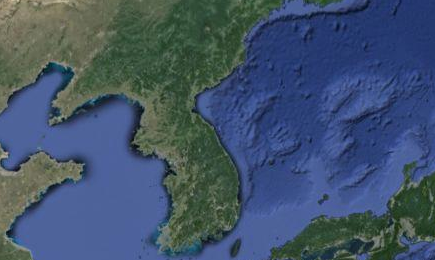

KOREA: STRATEGIC PATIENCE = STRATEGIC PARALYSIS
April 1, 2014 · in Analysis
Korea: Strategic Patience = Strategic Paralysis
Finding the Ideal Path to Reunification to Solve the Nuclear and Human Rights Issues
“Strategic Patience,” America’s approach to North Korea, has only gotten us strategic paralysis. If the desired effects are changing North Korean behavior, fostering good faith efforts towards denuclearization, and restarting the six party talks, Washington cannot point to any real successes. There are two major challenges in North Korea: the regime’s nuclear weapons program and its human rights atrocities. There is also the threat of war and the effects of regime collapse. The United States has worked for twenty years to try to end North Korea’s nuclear program and the United Nations just published its comprehensive Commission of Inquiry report on the abhorrent human rights violations being committed in the North. Yet neither of these efforts has or will likely result in changes in this troublesome country, or the achievement of objectives desired by the U.S. and the international community.
Elimination of the nuclear program or liberating North Korea by force are not options, as the second and third order effects would be too severe to the Republic of Korea, the region, and the world. Some policymakers rely on China to influence the North to end its nuclear program and wait patiently for the regime to change its behavior; however, this has not achieved the desired effects to date.
Why haven’t we gotten anywhere? Based on our knowledge of the nature of the Kim family’s regime and its strategy, it is clear that North Korea will not give up its nuclear program under any circumstances, and the horrendous human rights atrocities will not end as long as the Kim regime remains in power. If that is the case, the question is this: what policies and strategy should the United States and the Republic of Korea develop and implement?
The answer lies in the 2009 U.S–ROK Joint Vision Statement that says the Republic of Korea and United States will seek peaceful reunification of the Korean Peninsula. This vision was reaffirmed in May 2013 when South Korean President Park Geun-hye and President Obama met in Washington. Reunification has long been overlooked—seen as a distant dream—discounted because of the disparity between North and South, or viewed as an exclusively Korean problem. Little international attention has been paid to reunification and even less planning and no preparation made, save for the work that the Republic of Korea has done over the years.
But it is time to recognize that no change will occur on the Korean Peninsula unless there is reunification, and that the international community, and in particular the United States, should stand behind and assist the Republic of Korea in developing a path to reunification.
Some will ask how we can think about reunification when there is the threat of provocation, regime collapse, and conventional and nuclear war from North Korea. The common belief is that as long as these threats exist, there can be no possibility of reunification, let alone peacefulreunification. However, this is the very thinking that has led to the current strategic paralysis when it comes to addressing the North Korean problem.
The ideal path to peaceful reunification is built on respect, reconciliation, reform, rebuilding, and reunification (R5). The operative word is ideal. Some will immediately discount this as a mere dream; however, such a path can form the basis of a strategy and supporting campaign plan that provides multiple benefits even if peaceful reunification is not achieved in the near-term.
We should defer to (and support) the reunification plan of the Republic of Korea as President Park has initially described in her speech in Dresdenon March 28, 2014. In addition to the points made in her speech, the ideal reunification plan that we should support will likely reflect several key objectives:
- Provide full support to President Park’s policy of trustpolitik.
- Develop a comprehensive information operations and influence campaign to inform the North Korean population about the outside world and educate about the benefits or reunification.
- Establish peninsula-wide land ownership policies to include compensation vice recompense for those with pre-1948 claims in the North.
- Develop military integration plans with specific focus on how the two militaries will be integrated and how senior military leaders will be treated if they support reunification.
- Conduct detailed planning for infrastructure development and identify required government and non-government investment.
- Conduct detailed planning for economic transition and ultimately integration.
- Conduct detailed planning for the integration of governmental/administration functions.
- Conduct comprehensive diplomatic coordination for international cooperation for support of reunification.
Again, these are just some of highlights of an ideal and desired path to reunification. While we should strive to follow this path, the Kim regime has a vote and for various reasons may not agree. Unfortunately, there are three other paths that the North could pursue, any of which could be more likely than an embrace of the principles of an ideal reunification plan.
Bottom up internal resistance to the regime appears to be growing among parts of North Korea’s population and even within the periphery of the political elite and military. This could create the first alternative to the ideal reunification path. Such resistance should be monitored, assessed, understood, and possibly supported, to include through an unconventional warfare campaign led by the Republic of Korea. Although it is unlikely to lead an “Arab Spring” phenomenon, given the regime suppression mechanism, it is still possible and cannot be discounted. Such grassroots resistance could lead to a coup that might then seek reunification with the South. The danger with internal resistance is that it can lead to conflict within the North, which could grow out of control and spill over into the Republic of Korea. However, if there was a regime change, with or without conflict, there would eventually be opportunity to get back on the ideal path to reunification. All the planning and preparation that has been previously conducted would still have value after regime change that followed from internal resistance.
(Continued at the link below)
Wednesday, March 26, 2014
Prepare for War in 2015, Kim Jong-un Tells Officers
I think the regime may be on a significant propaganda campaign directed at both internal and external audiences because of all the focus on Ukraine and Crimea, the South China Sea, the ROK, Japan, and US meeting, recent Chinese rhetoric about red lines in north Korea.
Prepare for War in 2015, Kim Jong-un Tells Officers
North Korean leader Kim Jong-un has mentioned the possibility of a war breaking out on the Korean peninsula in 2015, it was revealed Tuesday. According to a source, Kim told military commanders earlier this year that an "armed confrontation could take place on the Korean peninsula in 2015" and ordered them to stock up on strategic supplies and remain combat ready.
The comments were made at about the same time that Kim spoke about improving relations with South Korea during his New Year's address.
At a loyalty rally in Pyongyang on Feb. 25, Kim also spoke about an "all-out war with the enemy in the name of revolution and final victory." Last year, Kim told key officials his aim of "reunification through force within three years."
The source said, "Since he came to power in late 2011, Kim Jong-un has often said that his aim is reunification 'through force' and that he would personally drive a tank and advance into Seoul."
Intelligence officials here were given the information and are monitoring possible provocations.
"Even amid its peace gestures, North Korea continues to harbor ambitions of reunification through force," a government official said. "We're doing everything to prepare against additional provocations including a missile launch and fourth nuclear test."
The year 2015 marks the 70th anniversary of North Korea's Workers Party and the division of the Korean peninsula.
 North Korean leader Kim Jong-un and military politburo chief Choe Ryong-hae (far left) watch a shooting competition at a military school in Pyongyang, in this March 12 file photo from the Rodong Sinmun.
◆ Committed to Revolution
Revising its founding principles last year, the Workers Party places the top priority on reunification based on the "juche" doctrine of self-reliance and "nationwide victory." Those words appear to refer to reunification through force.
The South Korean government is on the alert for intensifying provocations from North Korea in recent months. Over the last two months alone, the North fired 88 short- and mid-range missiles and on Tuesday shot two medium-range ballistic missiles into the East Sea.
The official KCNA news agency in August 2012 reported that Kim issued an order to troops to carry out an offensive to achieve “the great task of reunification."
"Marking his third year in power, Kim Jong-un is seeking to rally the military behind him in order to deal with inter-Korean and international relations," said Nam Sung-wook at Korea University. "We may even see further provocations."
North Korea is annoyed by increased discussion in South Korea about reunification. The North Korean propaganda website Uriminzokkiri on March 2 accused the South of harboring ambitions to "absorb" North Korea.
◆ Tactics
The North Korean military is under orders to familiarize itself with South Korean terrain. The Chosun Ilbo obtained a copy of a handbook that advises soldiers to get to know the landscape of the South. It details mountains, rivers, lakes, roads, railways and coastlines in South Korea and how they can affect combat conditions.
The handbook also explains how to change South Korean coordinates into figures and measurements used by North Korea as well as instructions on how to use GPS receivers.
A source said, "A mountain in South Pyongan Province contains a compound modeled on Cheong Wa Dae and surrounding terrain, where special forces troops train during summer and winter months."
englishnews@chosun.com / Mar. 26, 2014 13:05 KST
Subscribe to:
Posts (Atom)
-
From a project Peter Neumann of King's College is working on. You can find interesting things in the "Twitterverse" Pet...
-
I would like to call attention to Kyle Johnston's excellent article in our Georgetown Security Studies Review at this link on page 84: ...
-
Eight Points of Irregular Warfare: Special Warfare is the execution of activities that involve a combination of lethal and nonlethal ...
