Showing posts with label north Korea as a nuclear power. Show all posts

Sunday, July 22, 2018

Aspen Security Forum: Peace on the Korean Peninsula?

An hour and 20 minute video on the Korean Peninsula with the first part featuring a discussion between GEN Brooks in Seoul via video and Gordon Chang followed by a panel discussion with some critical commentary.

GEN Brooks' remarks are an example of a general officer who knows how to speak to the media.  They should show this video at the Capstone course for new general officers.  He faced one of the most complex problems to discuss in public and I think he was masterful.


3:30 – 4:50 PM MDT
Peace on the Peninsula?
Is peace at hand on the Korean Peninsula? Denuclearization and reunification, miraculously, now seem possible. Is this prospect real or a mirage?
Vincent Brooks, Commander, United States Forces Korea; Commander, United Nations
Command; Commander, ROK-US Combined Forces Command
Suzanne DiMaggio, Senior Fellow and US-Iran Initiative Director, New America Foundation
Woongsoon Lim, Deputy Chief of Mission, Embassy of South Korea to the United States
Michael McCaul, Chairman, House Committee on Homeland Security
Sue Mi Terry, Senior Fellow and Korea Chair, Center for Strategic and International Studies
Moderator: Gordon Chang, Columnist, The Daily Beast

Saturday, March 3, 2018

N. Korea issues warning over U.S. military provocations

We should remember that north Korea considers the ROK/US Combined Forces Command exercises a provocation while north Korea conducts provocations that includes shelling civilian and military personnel on islands and murdering 46 South Korean sailors when it sank the Cheonan.

north Korean propaganda has pundits, progressives (in the ROK) and the press (and those who sympathize with north Korea) calling for another postponement or even cancellation or a at least a reduction or scaling back of the upcoming exercises.  But we should ask ourselves objectively what do we think we will get from north Korea if we postpone, cancel, or scale back the exercises?  What do these people think the north will do in return?

  • Will the north end its provocations to gain political and economic concessions?
  • Will it end its winter and summer training cycles?
  • Will it withdraw the thousands of artillery and rocket systems along the DMZ?
  • Will it cease its infiltration of spies and SOF into the South?
  • Will it cease its unification campaign using subversion, coercion, and if necessary force?
  • Will it end seeking to split the ROK/US Alliance?
  • Will it ends its global illicit activities (counterfeiting, drug trafficking, use of slave labor)?
  • Will it end its proliferation activities around the world?
  • Will it end its WMD cooperation with Syria and Iran?
  • Will it end its human rights violations and crimes against humanity?
  • Will it come to the negotiating table?
  • Will it pledge to denuclearize?
  • Will it denuclearize?

Does anyone think that postponement, cancellation or scaling back of the exercises will result in a reduction in tensions?

The only thing we will see happen if we postpone, cancel, scale back the exercises is that the regime will shift fires to new propaganda targets and continue all of the above.  The only thing we will get in return for postponing the exercises are:

  • A reduction in ROK/US military readiness.
  • A reduction in ROK/US deterrent capabilities.
  • More emboldened north Korean propaganda as it will deem cancellation a success (and it will still focus on the exercises even if we scale it back to a one platoon, one aircraft, and one ship exercise)
  • More demands on the ROK/US alliance that will not be reciprocated by the regime.

And of course all of the above is not all inclusive, the north will think of many more ways to benefit from our decision to cancel the exercises.

We should remember that the reason for the exercises is due to the stated and demonstrated threat to the very existence of our blood ally the Republic of Korea.

The bottom line is that we will get nothing in return for postponement or cancellation of the exercises. Some might feel good about doing it in the misguided idea that it will somehow change north Korean behavior and reduce tensions but I believe that they could not be more wrong.

N. Korea issues warning over U.S. military provocations

SEOUL, March 3 (Yonhap) -- North Korea's representative told the United Nations-sponsored Conference on Disarmament in Geneva last month that Pyongyang stands ready to fight back against any military provocation from the United States, the North's official media reported Saturday.
The Korean Central News Agency quoted the North's representative to the U.N. office in Geneva as telling the plenary meeting of the U.N. disarmament conference on Tuesday that it is a legitimate right of a sovereign state to take measures to increase its national defense capability for coping with outside threats.
"(North Korea) was compelled to possess a nuclear deterrent in order to protect its sovereignty and the security of its nation from the harsh hostile policy and nuclear threat of the U.S. that have persisted for years," the unidentified representative was quoted as saying in English.
"However, the hostile forces led by the U.S. labeled the exercise of this legitimate right as a 'threat to global peace' and misused the voting mechanism of the U.N. Security Council to cook up several 'sanctions resolutions' in an attempt to deprive the DPRK of its self-defensive right." The DPRK stands for the Democratic People's Republic of Korea, the North's official name.
The North's representative then accused the U.S. of "amassing huge strategic assets in and around the Korean Peninsula, and mulling staging joint military exercises aimed at a pre-emptive nuclear attack on North Korea."
"In order to defend itself from such threats, the DPRK had access to nuclear weapons, treasured sword of justice. As we have stated on numerous occasions, we will consider any type of blockade as an act of war against us, and if the U.S. has indeed the guts to confront us in any 'rough' manner, we will not (hesitate) to respond to it," the representative said.
A Reuters photo taken Feb. 27, 2018, shows Han Tae-song, North Korea's ambassador to the United Nations in Geneva, speaking at the U.N.-sponsored Conference on Disarmament in Geneva.Photo by: Yonhap
(END)

Thursday, March 31, 2016

North Korea's nuclear threat: Assessment, global responses and solutions

Below is a special report in the Washington Times for this week's nuclear security summit. There are 39 articles, essays, OpEds from  a wide range of people and Korea watchers (including yours truly)

North Korea's nuclear threat: Assessment, global responses and solutions

North Korea's nuclear threat: Assessment, global responses and solutions is a Special Report prepared by The Washington Times Advocacy Department.

RECENT STORIES

Only united allies can compel North Korea to keep its promises

BY AMBASSADOR CHRISTOPHER HILL
The North Korean nuclear issue continues to be probably the major security challenge of the Asia Pacific region. After all, it was some 10 years ago that the North Koreans agreed they would abandon all their nuclear programs. And since that time there were efforts to get them to implement that agreement, but today they have essentially said they are no longer interested in denuclearization.

Post-sanctions provocations seen as prelude to another nuke test

North Korea recently conducted a test of its new KN-11 submarine-launched ballistic missile, further enhancing its nuclear delivery options amid heightening tensions on the Korean Peninsula and with the larger international community. The SLBM test was quickly followed by the firing of five short-range ballistics missiles into the Sea of Japan.

Nuclear summit: Finishing 'strong'?

BY LARRY MOFFITT
It was on a visit to Prague in 2009 that President Obama fired a shot across the bow of nuclear proliferation. Articulating a somewhat utopian vision of a nuclear-free world, Mr. Obama's first big foreign policy speech focused on "America's commitment to seek the peace and security of a world without nuclear weapons."

'Hyperproliferation' in North Korea

BY PETER VINCENT PRY
After a month of U.S. pleading, China and Russia reluctantly agreed to more United Nations sanctions, punishing North Korea for illegal nuclear and missile tests on Jan. 6 and Feb. 7 — performed despite already being under U.N. sanctions for a decade, since 2006.

More U.S. defensive measures wise response

BY REBECCAH L. HEINRICHS
Does the brutal, provocative and nuclear-armed North Korean regime actually pose a threat to the United States?

The hidden North Korea-Iran strategic relationship

BY LARRY NIKSCH
Amid the official attention and publicity given to the Iran Nuclear Agreement and North Korea's new nuclear and missile tests, an important element of these stories has been largely missing: North Korea's strategic collaboration with Iran.

North Korea's 'lens' sees 150 years of conflict

BY RODGER BAKER
This summer North Korea will mark the 150th anniversary of a seminal event in the introverted nation's history, namely, the beginning of today's ongoing struggle against U.S. aggression.

Nuke tally could double by 2020

BY JENNY TOWN
On March 9, North Korea's state media released photos of Kim Jong-un inspecting a miniaturized nuclear weapon and modern re-entry body. While experts have believed for some time that the North had miniaturization capabilities, the photos put to rest any doubts from skeptics that such capabilities existed, and signaled to the world, once again, that the North's ambitions for weapons of mass destruction (WMD) are both real and a serious, growing threat.

U.S. applying 'sustained pressure' on North Korea

On March 16, President Barack Obama signed an order imposing U.N.-backed "robust new sanctions" on North Korea. The move comes amid a series of reprisals from Pyongyang, including the jailing of a 21-year-old American student.

Getting DPRK to Six Party Talks

BY JOHN KERRY
The United States and China share one of the most consequential relationships in the world.

New U.N. sanctions to severely curtail DPRK weapons programs

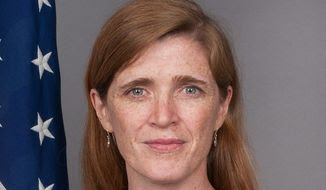
BY SAMANTHA POWER
With each nuclear test and launch using ballistic missile technology, the DPRK improves its capability to carry out a nuclear missile attack, not only in the region but also a continent away

Ban on DPRK nuclear test: 'I condemn it unequivocally'

BY BAN KI-MOON
The underground nuclear test announced by the Democratic People's Republic of Korea (DPRK) on January 6 is deeply troubling.

U.N. sanctions deserve swift implementation

BY MATT SALMON
The U.N. Security Council adopted a strong new resolution against North Korea's nuclear and missile programs, recognizing the persistent threat this rogue regime presents to the world.

Congress united on North Korea sanctions

BY REP. ED ROYCE
For three years the Foreign Affairs Committee I chair has worked with great determination to build support for this North Korea sanctions legislation. I want to thank my Democratic colleagues, especially Ranking Member Engel, for their support. I also thank Senators Corker, Cardin and Gardner for their leadership in the Senate, and for their strong additions, particularly on human rights and cyberattacks by the brutal and hostile North Korean regime.

Turning attention to the 'forgotten maniac'

BY SEN. CORY GARDNER
For decades the United States and its allies like Japan and South Korea have faced a complex threat in North Korea.
South Korean President Park Geun-hye, left, ushers U.N. Secretary-General Ban Ki-moon, right, at the presidential Blue House during their meeting in Seoul Friday, Aug. 23, 2013. (AP Photo/Jung Yeon-je, Pool)

Peace in Korea would be 'starting point' for a nuclear-free world

BY PARK GEUN-HYE
The spirit of the March First Independence Movement led to the establishment of the Provisional Government of the Republic of Korea, and we eventually realized long-yearned-for independence.

North Korea should 'top the agenda' at no-nukes talks

BY YUN BYUNG-SE
We all know the [Conference on Disarmament] can play a catalytic role in furthering disarmament and arms control, thereby improving the international security landscape. Unfortunately however, since 1998, the CD has lost steam

NORTH KOREA NUCLEAR THREAT: Japan implementing new restrictions on North Koreans

BY SHINZO ABE
Japan highly appreciates that the United Nations Security Council unanimously adopted Resolution 2270 regarding North Korea's nuclear test in January and ballistic missile in February
Japan's Prime Minister Shinzo Abe arrives for a dinner meeting at the Japanese ambassadors residence in Washington, Wednesday, March 30, 2016.  (AP Photo/Manuel Balce Ceneta)

Japan forges ahead in a sea of complexity

BY LARRY MOFFITT
Japan will host the G-7 Summit in Ise-Shima in May as a nation facing the most complex issues in balancing regional and global powers to keep the peace, while also maintaining strong forward motion with their economy.

'When did America forget that it is America?'

BY PAUL COYER
Amid the plethora of security threats the world is facing today, North Korea, with its fourth nuclear test on Jan. 6, long-range missile test on Feb. 7 and firing of short range missiles in late March, has been doing all it can in order to ensure that it gets its share of attention.

China also seeks denuclearization of Korean Peninsula

BY WANG YI
China is a permanent member of the Security Council. We have the obligation and capability to implement all the resolutions passed by the Security Council, including Resolution 2270 concerning the DPRK.

At the NSS, watch the sidelines for real action

BY STRATFOR GLOBAL INTELLIGENCE
Leaders from across the globe will gather in Washington from March 31 to April 1 for the fourth and final Nuclear Security Summit.

In Putin's chess game with the West, North Korea is a pawn

Make no mistake, the Stalinist North Korean regime is no close ally of the Kremlin but simply a pawn in Russia's great geopolitical game with the United States and the West.

Can South Korean-made TV dramas prepare the North for reunification?

BY DAVID S. MAXWELL
The U.N. Security Council's resolution 2270, adopted in March with the support of China and Russia, is arguably the toughest sanctions regime enacted against Korea since the war was suspended with the 1953 armistice.

U.N. sanctions on North Korea: Time is running out

BY LARRY NIKSCH
With his nuclear and missile tests this year, Kim Jong-un has signaled the United States that he is accelerating North Korea's program to develop an intercontinental ballistic missile (ICBM) with a nuclear warhead that could strike the United States.

Is Kim Jong-un a martyr?

BY ALEXANDRE MANSOUROV
Western experts believe North Korea will not attack South Korea militarily for three main reasons: The DPRK leadership is not suicidal; the North Korean regime is rational and, therefore, can be deterred by the U.S. conventional military presence and nuclear umbrella in the Republic of Korea; and the Korean People's Army cannot mount a successful military attack without the blessing and backing of its main and sole ally, China, which no longer supports its military provocations and opportunistic behavior.

NK's system of privilege, loyalty and 'human rights denial'

BY ROBERT M. COLLINS
Especially since the release of the report by the U.N. Commission of Inquiry on Human Rights in the Democratic People's Republic of Korea (UNCOI) in February 2014, Kim Jong-un's regime has come under increased scrutiny by the international community for its human rights abuses.

North Korea's motivations, capabilities and proliferation

BY BRUCE E. BECHTOL AND JR.
Recent rhetoric emanating from the North Korean regime has been quite threatening — and may signal a real "cold spell" for any outreach the isolated regime will be willing to embrace. But even more troubling are the actions that have been taken since January 2016. A successful underground nuclear test in January and a successful launch of a three-stage ballistic missile with the range to hit the mainland United States (under the cover of a "satellite launch") are only the beginning of the threatening behavior.

Kim Jong-un's leadership style

BY KEN E. GAUSE
While he has only been in power for less than four years, some information, albeit highly speculative, is beginning to emerge about Kim Jong-un's leadership style.

Crimes against humanity demand accountability

BY THE HON. MICHAEL KIRBY
North Korea challenges international peace and security. Its proved human rights abuses demand accountability of those responsible. But are these two imperatives compatible?
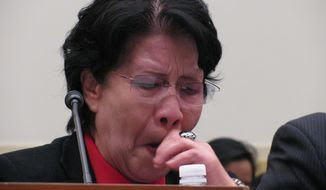
Kim Young-soon

Miseries of women, others at DPRK prison camps revealed

BY ANN BUWALDA AND NIA EMERSON
On March 18, four women defectors of North Korea gave a powerful reminder that as the world turns its attention to North Korea's alarming nuclear activities, women and other North Korean citizens are silently suffering in the clutches of the brutal regime.

Loyal but exploited: North Korea's overseas laborers

BY GREG SCARLATOIU
North Korea's exportation of laborers to foreign countries earns the Kim Jong-un regime part of the hard currency needed to develop its weapons and to keep its elites loyal. Recent studies indicate that at least 50,000 North Korean laborers are officially dispatched overseas, earning the Kim regime between $120 million to $230 million per year. However, recent data from China and Russia indicate that the number of North Korean workers officially dispatched to those countries may have increased dramatically in recent years, with an estimated 47,000 reportedly in Russia in 2015.

South Koreans handling 'daily stress' of North's provocations

BY REP. JOHN DOOLITTLE
I was in South Korea in mid-February with a fact-finding delegation of experienced policy leaders on Korean Peninsula and Northeast Asia issues sponsored by The Washington Times. Our visit was given a heightened immediacy by the fact that it happened to coincide with a flurry of strategic provocations from the North.

Trilateral security can check North Korea nuclearization

BY MCDANIEL D. WICKER
The Korean Peninsula has posed a seemingly intractable challenge for the United States for six and a half decades, and North Korea's latest round of provocations has crystalized the danger of a nuclear-armed regime. Beijing and Washington may disagree about the future of Korea, but leaders on both sides of the Pacific agree that such weapons have no place in North Korea. Unfortunately, previous efforts to deter Pyongyang have failed. Successfully prohibiting North Korea from nuclear weaponization requires a new strategy that utilizes a strengthened trilateral alliance between the United States, Republic of Korea and Japan.
This photo provided by the Defense Department's Missile Defense Agency, taken Jan. 28, 2016, shows a long-range ground-based interceptor is launched from Vandenberg Air Force Base, Calif. As North Korea rattles its nuclear saber and threatens to bomb the U.S. at any moment, a nerve-jangling question hangs in the air: If North Korea did launch a nuclear-armed missile at an American city, could the Pentagons missile defenses shoot it down beyond U.S. shores? (Defense Department's Missile Defense  Agency via AP)

Allied coordination needed to counter North Korea

BY BRUCE KLINGNER
North Korea is easy to ridicule. Its portly, rhomboid-haired leader looks like an Austin Powers villain. His over-the-top, bombastic threats sound like Soviet propaganda on steroids. Nighttime satellite photography suggests it can't even power a light bulb. No wonder it's been routinely dismissed as not posing a threat for "at least several more years."

Discussions could be 'achievable,' 'desirable' to all

BY AMBASSADOR JOSEPH R. DETRANI
The North Korean nuclear and missile programs are growing threats to the global community. To date, the international community's response to these programs has been weak and ineffective.

Sanctions can work, but new incentives are needed

BY THE HON. DAVID CLARKE
On April 25, Australia will commemorate Anzac Day to pay tribute to those who have served the nation in wars and conflicts from World War I until the present-day "war on terrorism."

Parliamentarian global network to build consensus

BY THE HON. DAN BURTON AND THE HON. JOSE DE VENECIA JR.
One hundred and fifty current members of parliaments from 50 nations convened in Seoul in February to propose the establishment of an organization without precedent.
A man watches a TV screen showing a file footage of the missile launch conducted by North Korea, at Seoul Railway Station in Seoul, South Korea, Monday, March 21, 2016. North Korea fired five short-range projectiles into the sea on Monday, Seoul officials said, in a continuation of weapon launches it has carried out in an apparent response to ongoing South Korea-U.S. military drills it sees as a provocation. (AP Photo/Lee Jin-man)

Experts offer latest threat assessment, responses at TWT briefing

BY CHERYL WETZSTEIN
The threats posed by North Korea are at their greatest level in two decades -- and there isn't clarity about what geopolitical responses should be planned, experts told a recent panel discussion held at The Washington Times.


Sunday, October 13, 2013

The Nuclear Roadblock to NK Development [Saturday Interview: L. Gordon Flake]

Excerpts:

Why would we want to recognize them as a nuclear power? Why would we want to give them that credibility? We don’t. We will not have a general meeting about the Six-Party Talks until North Korea agrees on what we’re talking about. And the focus and topic of the talks is denuclearization. 

There is no other topic. The problem with North Korea today is they don’t want to talk about denuclearization. What does “denuclearization” mean? By North Korea’s definition, it means a peace treaty, the end of hostile behavior, then Russia, China and the U.S. abandoning nuclear weapons all together. That’s what it means. 

When we say denuclearization, we mean the fulfillment of the 2005 joint statement, which says, “You will unilaterally abandon your nuclear weapons and return to compliance with those peaceful agreements, just like South Korea, Taiwan, Japan, and 180 other countries have done.” That’s what it means for us.

Conclusion:
GF: As long as North Korea has nuclear weapons, the U.S. and the UN will actively oppose the success of the Byungjin Line of simultaneous nuclear and civilian economic development. Before they had nuclear weapons, we would have supported economic development. 

We do not support the economic development of North Korea because we do not want a scenario in which North Korea succeeds with its nuclear weapons program, and that’s a congruency of time. Obviously there are many other obstacles as well; human rights are one of them. The basic political system and the free flow of information are similarly problematic, but the number one problem now is the nuclear weapons program. Until they abandon their nuclear weapons program, they will not have economic development. 

The North Korean regime has three key pillars: control over the flow of information, control over the movement of people, and control over the means of production. We tell North Korea, “We want you to open and reform,” but if you open and reform, you lose control of the movement of the people, you lose control over the flow of information, and you lose control over the means of production. This is why North Korea is so hesitant to reform because it’s dangerous. 
The greatest obstacle is the nature of the North Korean regime. If they want to reform and open, they must change the nature of their regime, and that is very difficult.

Gordon's seven paragraphs above do more to succinctly, simply, and clearly explain the nature of the Kim family regime and the nuclear issue than other essay or report.  I wish that policy makers and pundits would commit them to memory.
V/R
Dave

The Nuclear Roadblock to NK Development

[Saturday Interview: L. Gordon Flake]http://www.dailynk.com/english/read.php?cataId=nk02500&num=11071
By Oh Se Hyeok
[2013-10-13 03:53 ]  
Facebook  Twitter
▲ L. Gordon Flake of the Mansfield Foundation (ⓒDailyNK)
In late September, the Asan Institute for Policy Studies held its annual conference on North Korea in Seoul, bringing expert voices from South Korea and around the world to discuss a multitude of policy issues pertaining to North Korea and the wider region. 

One of the U.S.-based experts taking part in the event, L. Gordon Flake of the Mansfield Foundation subsequently met with Daily NK reporter Oh Se Hyeok to discuss a range of subjects, including international coordination on North Korea and the reality that for as long as North Korea opts to pursue nuclear weapons, there is no way for the international community to embrace the countrty's attempts to bring about substantive economic development.
Oh Se Hyeok (Oh): Despite international pressure, North Korea seems determined to develop its nuclear capabilities. Therefore, how should the international community deal with North Korea going forward?

L. Gordon Flake (GF): It really depends on what North Korea does. If they test another nuclear weapon, there is a well-established series of responses by the United Nations Security Council that will take place. As per the character of the United Nations Security Council, if they pass a sanctions resolution and North Korea ignores it, then the issue again goes back to the Security Council. 

So there’s no question about that particular issue. If North Korea tests another long-range missile, if they test another nuclear weapon, we know that the issue will be referred back to the UN Security Council. 

There is not a lot of new action we can take, frankly, but each time North Korea does something we can become a little more focused. There are no other new options; we will just continue to tighten up international pressure in response to their provocative acts.

Oh: That means that even if we don’t anticipate a positive response from North Korea, we still have to go on the offensive.

GF. Once sanctions are in place, it is hard to take them off. In other words, if sanctions come about after a nuclear or long-range missile test, you’re not going to change North Korea by ceasing the punishment. So really, the only way to go is to do more. There is no option to reduce sanctions. As long as they continue to pursue their long-range missiles and nuclear program, the level of sanctions will only increase. 

Oh: That’s a very clear message. But what if the Six-Party Talks take place in Pyongyang? So far all the meetings have been held in Beijing.

GF: The location doesn’t matter. It’s in China because China has been able to take the lead on that, and we like China taking the lead. The reason the U.S. has not come back to the Six-Party Talks is not related to the location. It has everything to do with the fact that North Korea is not willing to discuss giving up its nuclear weapons. 

They are not willing to abide by their previous agreements, and their basic position now is, ‘Look, I made a promise. I broke that promise. Let’s talk about making a new promise.’ It just doesn’t make sense. First, you have to re-establish credibility. As long as North Korea continues to assert that they are a nuclear power, that they will not abandon their nuclear ambitions, there’s nothing to talk about. So the location of the talks does not matter.

Oh: But if the delegates were to gather in Pyongyang, then that would give an indirect message to the North Korean people and their leaders.

GF: But there is also a risk. The delegates gather in Pyongyang and North Korea just tells its people, “We are a nuclear power, and these other countries have all come to recognize us as a nuclear power.” 

Why would we want to recognize them as a nuclear power? Why would we want to give them that credibility? We don’t. We will not have a general meeting about the Six-Party Talks until North Korea agrees on what we’re talking about. And the focus and topic of the talks is denuclearization. 

There is no other topic. The problem with North Korea today is they don’t want to talk about denuclearization. What does “denuclearization” mean? By North Korea’s definition, it means a peace treaty, the end of hostile behavior, then Russia, China and the U.S. abandoning nuclear weapons all together. That’s what it means. 

When we say denuclearization, we mean the fulfillment of the 2005 joint statement, which says, “You will unilaterally abandon your nuclear weapons and return to compliance with those peaceful agreements, just like South Korea, Taiwan, Japan, and 180 other countries have done.” That’s what it means for us.

Oh: What motivated North Korea to postpone the recent round of family reunions? 

GF: Most likely, it has to do with an internal debate inside North Korea, but we cannot be sure.

There are clearly some people in North Korea who want economic opening and development, and there are military or other forces who are very skeptical about it. There are clearly people who like Kaesong and others who don’t like Kaesong. I don’t think this has anything to do with South Korea or other foreign policy elements. It has to do with domestic issues inside North Korea.

Oh: How can South Korea promote a constructive relationship with North Korea, given recent developments?
(Continued at the link below)
http://www.dailynk.com/english/read.php?cataId=nk02500&num=11071

Giving Tuesday Recommendations

  Dear Friends,  I do not normally do this (except I did this last year and for the last few years now, too) and I certainly do not mean to ...