Showing posts with label Yemen. Show all posts

Tuesday, April 7, 2015

Reading for Tuesday April 7


23 Countries Want India's Help in Yemen Evacuation Operations


Perhaps we should be number 24 since we seem unable to evacuate our own citizens.

Excerpt:

India’s response to the crisis in Yemen has been both competent and convincing when it comes to both the safety of its own citizens and collaborating with third parties. As I’ve written before, New Delhi is eager to build a reputation for itself as a reliable “first responder” in the Indian Ocean Region (IOR). Recently, before the current crisis in Yemen, India demonstrated this with its swift naval deployment to the Maldives after a water shortage crisis. By answering calls for assistance from nearly two dozen states in Yemen, India can prove that it’s up to the task.

A comment we have not heard made about US crisis response in some time.


23 Countries Want India's Help in Yemen Evacuation Operations
The INS Mumbai with rescued Indian citizens in Djibouti. April 5, 2015.
Image Credit: Flickr/ MEAphotogallery


India’s success in evacuating its citizens from Yemen hasn’t gone unnoticed.

U.S. agrees to refuel Saudi planes, but isn't evacuating Americans from Yemen

Perhaps we will need that new fusion cell to deal with US hostages when they are taken in Yemen by either AQAP or the Houthis.


BY JAMES ROSEN
McClatchy Washington BureauApril 6, 2015 Updated 6 minutes ago


Defector sends thousands of 'The Interview' DVDs to North Korea


Iran nuclear deal good example for N. Korea: Christopher Hill


With all due respect to Ambassador Hill I think he misses the point here.  India has nuclear weapons and is not giving them up.  That is why north Korea wants to be like India and not be like Iraq, Libya, Burma and anyone else who has given up either its actual or the pursuit of a deterrent capability.  I seriously doubt that this framework or even an actual agreement if one is ever reached with Iran will influence the Kim Family Regime to follow suit.  The only agreement the north will make will be one that recognizes the north as a nuclear power and focuses on limitation or reduction but not elimination.  And we should keep in mind that sanctions against north Korea do not have the same effects as sanctions on Iran.

   Hill said he is optimistic about the Iranian nuclear deal, and that the agreement is a good example for North Korea as it demonstrates "sincerity" on the part of the "P5," the five permanent members of the U.N. Security Council that took part in the negotiations, together with Germany.
"If I were a serious North Korean, I would be looking at that and saying, 'Why can't we do something like this?'" Hill said during the book discussions at the Johns Hopkins University's School of Advanced International Studies (SAIS).
"I say that because they (North Korea) used to tell me, 'Why can't we be India?'" said Hill, who is now dean at the University of Denver's Josef Korbel School of International Studies. "This (Iranian deal) would be a real example from the Iran talks to make the North Koreans think."
But I think Ambassador Hill is on the right track here although I just do not buy the unspoken assumption that some day Kim Family Regime will want to "join the world."  To do so may very well mean the end of the Regime.

 Hill said, however, that he has not seen a sign from the regime of North Korean leader Kim Jong-un that it is "interested anymore in getting rid of their nuclear weapons."

   "I'm not sure they understand that they have to give up their nuclear weapons. I think the basic problem, unlike Iran, unlike many people in Iran, not other people in Iran but many people in Iran, I don't think North Korea has collectively decided they want to join the world," he said.

2015/04/07 04:31
By Chang Jae-soon

TATS AND TECHIES: BUILDING THE NEXT U.S. MILITARY


Excerpt:

Taken together, the Carter and Odierno announcements suggest that U.S. military leaders are reassessing existing policies. They both point toward a new talent management approach – acknowledging the changing goals, interests, and preferences of today’s individual service members from a new generation while simultaneously ensuring that the needs of military services are fully met. If carried out, this new direction will inevitably cause major changes to long-held cultures and traditions.


I do not think talent management can occur without significant personnel reforms of DOPMA and Goldwater Nichols and the industrial age personnel philosophies of readiness )(faces to spaces) and emphasis on personnel management by template (career paths to ensure all meet the nearly identical requirements for promotion to the next rank)


But the reality is that the U.S. military is and will likely largely remain a fundamentally hierarchical, bureaucratic, and conservative organization. There are some very good reasons for that; the U.S. military does not, and should not, become like Zappos and remove its entire hierarchy while driving out employees who crave structure. The U.S. military is unlikely to embrace sweeping change for the best of reasons: The chaotic nature of wars requires substantial individual and organizational discipline to fight and win them. For sizable parts of the force, that may be appropriate – for now.
But warfare itself is changing. The next major war involving U.S. military forces may well demand more skills related to executing cyber attacks on an adversary’s networks than to launching large-scale infantry assaults. The shifting nature of emerging future warfare will inevitably encompass and combine all manner of new technologies, threats, and organizational responses. Taking on those challenges with a military that still manages its people largely like the force that entered Iraq in 2003 or even Kuwait in 1991 seems profoundly shortsighted. The changing face of 21st century warfarerequires new approaches and bold experimentation.

Conclusion:


The seeds of winning the next war may be found in the speeches that Carter and Odierno gave last week. They are quietly sounding the call for change. There is an entire generation of young American men and women ready to answer that call, and tens of thousands already in uniform who will be heartened by Carter and Odierno’s distinct (and perhaps grudging) recognition that their generation is truly different. To win the fights of the 21stcentury, the nation’s military must inspire and motivate this generation both to serve, and to stay. To do so, it must be ready to experiment with new ideas, challenge long-held norms, and be prepared to divest those things not absolutely essential.Maintaining a military filled with people capable of out-thinking and out-fighting U.S. adversaries in the next decade may depend on many of these fresh ideas catching fire and spreading throughout the force.

THE AMERICAN WORLD ORDER AND CHINA’S NEW BANK


Excerpts:

Even if China’s motives in launching the AIIB are purely self-interested, the bank responds to a pressing need. According to an August 2014 policy noteby the G-20, “the OECD estimates that $70 trillion in additional infrastructure capacity will be needed globally” by 2030. A January 2013 report by the World Economic Forum forecasts that $5 trillion of such investment will be required through then (translating to $75 trillion over the next 15 years). While the need for infrastructure may be greatest in Asia, it is universal; as such, the decision by some close U.S. allies to apply for membership in the AIIB is less about begrudging acquiescence to China’s strategic preferences than about a sensible assessment of the gains to be had by participating in the economic initiatives of a country that continues to grow by over 7 percent annually and is poised to have the world’s largest economy.
...
By declaring it would not apply for membership in the AIIB, the United States reinforced the impression that it is resistant to China’s further integration into the institutions of global economic governance — an impression that is especially regrettable considering that the United States has done more than any other country to facilitate that very incorporation.
...
The United States can continue to play a central role — even the central role — in the evolution of world order, but not if it attempts to stall or reverse deeply rooted system-level trends: The rise of China is one, as is, more broadly, the movement of the world’s center of economic gravity to the Asia-Pacific. While one may dispute Larry Summer’s proposition that “the United States lost its role as the underwriter of the global economic system” last month, it is difficult to disagree that the Bank’s success “should lead to a comprehensive review of the U.S. approach to global economics.” Such a review would likely conclude that including China in its economic initiatives and participating in China’s gives the United States more leverage to shape the Asia-Pacific’s economic order—and economic order writ large—than, respectively, excluding China and shunning its efforts.


AMERICA DID HYBRID WARFARE TOO


Good conclusion:

That the United States and NATO, a conventional defensive alliance, should be confounded by similar maneuvers on the part of Russia and left groping to “connect the dots” from Crimea to the Baltic is not a surprise. What should not be a matter for confusion is that hybrid warfare is not the exclusive province of a nefarious Putin, but rather a method available to any power with the motivation to employ it. This takes us only half way toward a solution. But, in paraphrase of Clausewitz, the first essential act of judgment is to establish the kind of war in which we are embroiled.
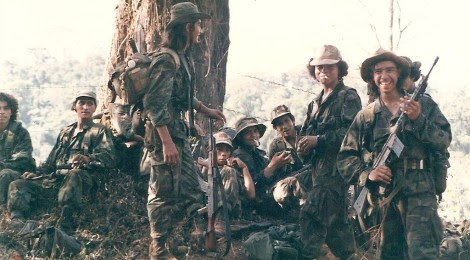
America Did Hybrid Warfare Too

April 7, 2015 · in 

The 5,548 ISIS Targets Struck By Coalition Air Forces, in 3 Charts
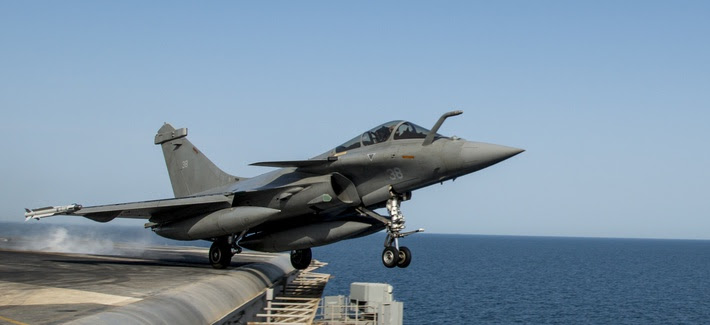
A French navy Rafale Marine aircraft launches from the U.S. Navy aircraft carrier USS Carl Vinson, on March 3, 2015.

http://www.defenseone.com/threats/2015/04/5548-isis-targets-struck-coalition-air-forces-3-charts/109426/?oref=defenseone_today_nl

APRIL 6, 2015BY KEDAR PAVGI
The Pentagon’s latest data release finally includes airplanes that were destroyed in fall 2014.

Saturday, April 4, 2015

Weekend Reading April 4-5 2015


The Strategist's Mission Statement

I would say that the answer to Maj Cavanaugh's good question on what makes a good strategist lies in the 39 words at the end of his piece. (e.g., secure ... desired policy outcomes)   He or she is someone who can not only devise a strategy of balanced and coherent ends, ways, and means but is someone who can "do" strategy which is an iterative process (requiring agility to adapt and adjust)  based on continuously assessing the conditions and situation and challenging assumptions in order to achieve the policy objectives established by our political leadership.  The why is the policy objective and the definition of success is meeting the policy objective(s) (while knowing full well that political leaders can change the policy objectives at any time, or multiple times).    Another way to describe success is to achieve the "desired state".  I was at a conference this week and some very smart people discussed the idea (that I embrace) that we can never really achieve an end state but we can seek to achieve a desired state because the "willed enemy," other participants,  and the political and security situation are all constantly evolving.  This also necessitates the need to be able to do strategy (as the National War College teaches) vice just writing a single strategy and trying to execute that strategy while hoping that the conditions remain the same throughout the execution of the strategy.

Excerpt:
These are fine statements and descriptions for bureaucratic documents.  But here's my problem with them. They miss one essential cornerstone of strategy - the existence of a living, willed opponent.  There is no strategy with no "other."  And without this point of reference, how do I know how well I've done?  There is no such thing as a "good" strategist, precisely because "good" is an objective condition.  The only thing that matters in strategy is whether I'm relatively better than my opponent.  Thus, the one-eyed strategist succeeds in the caliphate of the blind. 
There is also no mention of an ultimate objective.  Some (particularly BHL Hart) say we fight to achieve "a better peace." In the documentation, I can't seem to find any mention of why the strategist plies their trade - a series of important tasks without an ultimate purpose.   


By Major Matt Cavanaugh

White House officials  defend Somalia strategy  as counterterrorism model

They doth protest too much.  We should not be defending models.  We should be understanding how the enemy adapts and the conditions change and then adapting our strategy instead of defending it as a model.  Yes models have value but I think the way they are applied in the national security space can be counterproductive and most important they can stifle creativity and critical thinking when our political leadership is more intent on defending its model than on "doing" effective strategy.  As an example our prevailing national security "model" is based on the concept of the "small footprint." Perhaps instead of being so self-limiting we should be seeking the "right" footprint (assuming we need a footprint at all).  If the right footprint is not feasible then perhaps we should reconsider the strategy altogether because if the small footprint is not feasible, suitable, or acceptable then perhaps we should not employ it.

Excerpt:

By some measures, it has paid dividends. U.S. drones have killed several of the Islamist group’s leaders, including two top planners in just the past month, a senior administration official said Friday. African Union troops backed by the United States have forced al-Shabab fighters to flee huge swaths of territory.
But this week’s massacre of 148 people at Garissa University College, the deadliest terrorist attack on Kenyan soil in two decades, demonstrates the limits of the administration’s approach and the difficulty of producing lasting victories over resilient enemies.
But we also have to realize that in doing strategy sometimes that ugly strategic concept comes into play:  "Sh*t happens" and that is why we need to be able to "do"strategy. (apologies to the horse for continuing to beat him).


Time For US Strategy Review; Then Tackle Goldwater-Nichols


This will need to be done in the summer of 2017 and should be held at the National War Collage just as was done in 1953.  There are useful lessons fro history.  Excerpt:

The best model for such a review, Krepinevich says, would be President Eisenhower’s Project Solarium, a complex, focused and far-ranging strategic review performed in 1953. It included three different teams working from differing assumptions about US goals. They worked non-stop over six weeks, forcing participants to keep their eyes on the ball and lending impetus to the effort.

A useful overview of Solarium is at this link: http://www.eisenhowerinstitute.org/about/living_history/solarium_for_today.dot  

But such a project requires real leadership including leadership who will value the process and consider the recommendations.


FBI confirms death of suspect Marwan in ill-fated Philippines raid


China shutters golf courses, probes officials who play


Not all golf courses of course but an interesting perspective on China, the communist party and leadership views on corruption.


Life inside Islamic State’s Caliphate not all that it seems


Excerpt:

But peer through the spin and it is clear Islamic State is neither as powerful nor as omnipresent as it pretends. All the signs are the group has passed the high-water mark of its power. Airstrikes as well as resistance on the ground this week routed Islamic State ­forces in Tikrit, handing the anti-Islamic State coalition its first major victory over Baghdadi’s ­forces in Iraq. Islamic State’s army is overextended. Its supply lines are under threat. In January, it was defeated in the battle for Kobane, a Syrian town of no strategic importance but one whose capture had become a trophy for the group’s propaganda-obsessed leaders. It was the first time Islamic State squared off against a well-organised opposition backed by coalition air power. It lost badly.
“They’re very good at fighting and dying in a position, particularly in an urban environment,’’ says Jim Molan, a retired Australian army officer who from 2004 to 2005 was chief of operations for the coalition in Iraq. “But apart from that, you have to ask yourself, have they ever defeated a half-competent army? They stood and fought in Kobane and they were defeated at great cost to themselves.’’

Errant shell puts US military's lessons learned in Korea to the test


The 2002 history shaped the situation on the Korean peninsula in many ways.  It actually was the spark  for the OPCON transfer debacle (a waste of a decade plus of time and resources that could have been focused on effective alliance transformation and readiness), the Yongsan and 2d Infantry Division relocations plans, and a strain in the alliance that north Korea was able to exploit (and of course what really ignited the spark was Rumsfeld's desire to get US forces off the peninsula as those US forces were "wasted" because he could not use them in the war on terrorism).

The other mistake (and lesson to learn) is that the command did not listen to its experts who advised the command to take immediate action but instead approached the situation from a purely American perspective (to include a general officer saying that we would show then how a justice system works when the two soldiers were court martialed and then acquitted thus no one was held responsible for the death of the two school girls and that statement may have had as much influence on the outcome of the 2002 presidential election as any statement by a foreigner could have had).

It is good to see that the current US command knows how to respect Koreans and maintain the Alliance.  

Excerpts:

Although none of the more recent incidents has caused any deaths, the question remains: If another Yangju-type tragedy occurred, would the U.S. face the same severe backlash?
“There is such explosive power if the U.S. attitude ignores South Korean [opinion],” said Kim Joon-hyung, an international politics professor at Handong Global University in Pohang.
However, Kim and others don’t think the U.S. would make that mistake again.
“I really don’t think there would be a repeat of a 2002-type event,” said Moon Chung-in, a Yonsei University political science professor. “It was a total lack of sensitivity on the part of the U.S. command that fueled the discontent with American forces. American commanders in South Korea have been very attentive afterward.”


Russia outguns US in information war with record propaganda spending


Of course a dollar for dollar comparison is not really useful but it is an indicator of how important propaganda is to Russia and Putin.  They take it seriously and they achieve effects with specific target audiences.  We should not try to match them dollar for dollar but we should strive to make our psychological operations and strategic communications more effective with the target audiences we can affect.


APRIL 03, 2015 4:48 PM ET

The Iran Nuclear Deal, in 3 Charts


By eliminating 12,000 centrifuges and five bombs’ worth of low-enriched uranium, the accord extends the breakout timeline for Iran to produce the highly enriched uranium core of a bomb to one year. By requiring the reconfiguration of Iran’s planned plutonium-producing reactor at Arak, the accord essentially closes this door to a bomb. And by agreeing to establish a new mechanism that will allow unprecedented access for the International Atomic Energy Agency (
IAEA) to suspicious nuclear sites anywhere in Iran, the accord makes it much more difficult for Iran to cheat.


Thursday's framework agreement was a start, but there are hundreds of areas where a final deal could be derailed. 

Saudi Air War Over Yemen Leaves U.S. on Sidelines


Excerpts:

Washington shouldn’t feel left out, according to Anthony Zinni, the retired four-star Marine who headed U.S. Central Command, which oversees the region, from 1997 to 2000. “Ever since the first Gulf War in the early 1990s, we’ve been pushing to get some sort of alliance in the region,” he says. “We wanted them to come together and basically find a way where we could support them but not have to lead them all the time.”

Zinni says the Saudis have acted because they hate the Houthis, hate the Iranians, and hate the idea of an ungoverned state next door. “They will not tolerate a Houthis-led Yemen on their southern border,” he adds. “And they’re pissed that the Iranians support them.” Saudi Arabia has attacked the Houthis before, he notes, but never this extensively.

A Funny Thing Happened When These Military Officers and Academics Got Together


Excerpts:

This exercise suggests, first, the importance of building personal relationships earlier in a career. If this is left until they are full professors, general officers or assistant secretaries of defense, it is too late; they will have less time to learn and will tend to be more certain in their views. Second, it highlighted the importance of a safe learning environment where ignorance can be disclosed, questions asked and mistakes made. This can be done intensely through an immersion process over the course of a few days, but it requires personal, professional and intellectual commitment. And third, it revealed the importance of informal conversations based on mutual respect during the inevitable down times of a tabletop exercise. Trust and reliance seemed to follow in short order.
The limitations to this approach are important to note. It is built around small groups; it is labor intensive; and it requires civilian and military participants to devote some of their valuable professional time to it. But even with these limitations the effort is worthwhile. National defense is a team endeavor; it requires the trust, devotion, and expertise of military and civilian leaders at many levels to make it work.

The Obama Doctrine: Let the Mideast Fight Its Own Wars


Excerpts:

U.S. officials have also expressed concern about Saudi Arabia’s ability to operate with the kind of sophistication that avoids collateral damage, negative headlines and fodder for enemy recruitment. Despite nationalistic swagger, many allies who have fought with the U.S. admit that no other country can compare with its ability to perform command-and-control, to find targets and hit them precisely and to oversee battle spaces to ensure all parties are coordinated.
Inexperience with that kind of discretion is already beginning to show in Yemen, following reports Monday that an apparent airstrike killed 20 civilians at a United Nations refugee camp there. Iranian media also bragged Monday that Houthi rebels in Yemen were able to shoot down a Saudi F-15 fighter jet, forcing its crew to eject into the Gulf of Aden where American airmen rescued them in international waters. U.S. defense officials confirmed the mission, but would not say what caused the pilots to eject or why the plane went down.
A situation as complex as Yemen is rife with opportunities for misunderstanding. BBC Arabic tweetedthen later retracted reports that the elusive Iranian Maj. Gen. Qassem Soleimani had been photographed at a Yemeni market. The leader of Iran’s hyper-zealous Revolutionary Guard Quds Force was previously reported to have been in Tikrit overseeing Shiite militias fighting the Islamic State.
Were Saudi Arabia to attack and kill a high profile Iranian officer, even accidentally, it may provoke a some form of war of retribution.
Even if the U.S. can secure a nuclear deal with Iran, the cryptic Shiite nation’s desire to assert power in the Middle East, and its Sunni foes’ retaliation, all but guarantees conflicts in this region for many years.


The White House has pushed Arab nations to start securing their neighborhood on their own, but the U.S. might not like the result.

Giving Tuesday Recommendations

  Dear Friends,  I do not normally do this (except I did this last year and for the last few years now, too) and I certainly do not mean to ...