Showing posts with label India. Show all posts

Tuesday, April 7, 2015

Reading for Tuesday April 7


23 Countries Want India's Help in Yemen Evacuation Operations


Perhaps we should be number 24 since we seem unable to evacuate our own citizens.

Excerpt:

India’s response to the crisis in Yemen has been both competent and convincing when it comes to both the safety of its own citizens and collaborating with third parties. As I’ve written before, New Delhi is eager to build a reputation for itself as a reliable “first responder” in the Indian Ocean Region (IOR). Recently, before the current crisis in Yemen, India demonstrated this with its swift naval deployment to the Maldives after a water shortage crisis. By answering calls for assistance from nearly two dozen states in Yemen, India can prove that it’s up to the task.

A comment we have not heard made about US crisis response in some time.


23 Countries Want India's Help in Yemen Evacuation Operations
The INS Mumbai with rescued Indian citizens in Djibouti. April 5, 2015.
Image Credit: Flickr/ MEAphotogallery


India’s success in evacuating its citizens from Yemen hasn’t gone unnoticed.

U.S. agrees to refuel Saudi planes, but isn't evacuating Americans from Yemen

Perhaps we will need that new fusion cell to deal with US hostages when they are taken in Yemen by either AQAP or the Houthis.


BY JAMES ROSEN
McClatchy Washington BureauApril 6, 2015 Updated 6 minutes ago


Defector sends thousands of 'The Interview' DVDs to North Korea


Iran nuclear deal good example for N. Korea: Christopher Hill


With all due respect to Ambassador Hill I think he misses the point here.  India has nuclear weapons and is not giving them up.  That is why north Korea wants to be like India and not be like Iraq, Libya, Burma and anyone else who has given up either its actual or the pursuit of a deterrent capability.  I seriously doubt that this framework or even an actual agreement if one is ever reached with Iran will influence the Kim Family Regime to follow suit.  The only agreement the north will make will be one that recognizes the north as a nuclear power and focuses on limitation or reduction but not elimination.  And we should keep in mind that sanctions against north Korea do not have the same effects as sanctions on Iran.

   Hill said he is optimistic about the Iranian nuclear deal, and that the agreement is a good example for North Korea as it demonstrates "sincerity" on the part of the "P5," the five permanent members of the U.N. Security Council that took part in the negotiations, together with Germany.
"If I were a serious North Korean, I would be looking at that and saying, 'Why can't we do something like this?'" Hill said during the book discussions at the Johns Hopkins University's School of Advanced International Studies (SAIS).
"I say that because they (North Korea) used to tell me, 'Why can't we be India?'" said Hill, who is now dean at the University of Denver's Josef Korbel School of International Studies. "This (Iranian deal) would be a real example from the Iran talks to make the North Koreans think."
But I think Ambassador Hill is on the right track here although I just do not buy the unspoken assumption that some day Kim Family Regime will want to "join the world."  To do so may very well mean the end of the Regime.

 Hill said, however, that he has not seen a sign from the regime of North Korean leader Kim Jong-un that it is "interested anymore in getting rid of their nuclear weapons."

   "I'm not sure they understand that they have to give up their nuclear weapons. I think the basic problem, unlike Iran, unlike many people in Iran, not other people in Iran but many people in Iran, I don't think North Korea has collectively decided they want to join the world," he said.

2015/04/07 04:31
By Chang Jae-soon

TATS AND TECHIES: BUILDING THE NEXT U.S. MILITARY


Excerpt:

Taken together, the Carter and Odierno announcements suggest that U.S. military leaders are reassessing existing policies. They both point toward a new talent management approach – acknowledging the changing goals, interests, and preferences of today’s individual service members from a new generation while simultaneously ensuring that the needs of military services are fully met. If carried out, this new direction will inevitably cause major changes to long-held cultures and traditions.


I do not think talent management can occur without significant personnel reforms of DOPMA and Goldwater Nichols and the industrial age personnel philosophies of readiness )(faces to spaces) and emphasis on personnel management by template (career paths to ensure all meet the nearly identical requirements for promotion to the next rank)


But the reality is that the U.S. military is and will likely largely remain a fundamentally hierarchical, bureaucratic, and conservative organization. There are some very good reasons for that; the U.S. military does not, and should not, become like Zappos and remove its entire hierarchy while driving out employees who crave structure. The U.S. military is unlikely to embrace sweeping change for the best of reasons: The chaotic nature of wars requires substantial individual and organizational discipline to fight and win them. For sizable parts of the force, that may be appropriate – for now.
But warfare itself is changing. The next major war involving U.S. military forces may well demand more skills related to executing cyber attacks on an adversary’s networks than to launching large-scale infantry assaults. The shifting nature of emerging future warfare will inevitably encompass and combine all manner of new technologies, threats, and organizational responses. Taking on those challenges with a military that still manages its people largely like the force that entered Iraq in 2003 or even Kuwait in 1991 seems profoundly shortsighted. The changing face of 21st century warfarerequires new approaches and bold experimentation.

Conclusion:


The seeds of winning the next war may be found in the speeches that Carter and Odierno gave last week. They are quietly sounding the call for change. There is an entire generation of young American men and women ready to answer that call, and tens of thousands already in uniform who will be heartened by Carter and Odierno’s distinct (and perhaps grudging) recognition that their generation is truly different. To win the fights of the 21stcentury, the nation’s military must inspire and motivate this generation both to serve, and to stay. To do so, it must be ready to experiment with new ideas, challenge long-held norms, and be prepared to divest those things not absolutely essential.Maintaining a military filled with people capable of out-thinking and out-fighting U.S. adversaries in the next decade may depend on many of these fresh ideas catching fire and spreading throughout the force.

THE AMERICAN WORLD ORDER AND CHINA’S NEW BANK


Excerpts:

Even if China’s motives in launching the AIIB are purely self-interested, the bank responds to a pressing need. According to an August 2014 policy noteby the G-20, “the OECD estimates that $70 trillion in additional infrastructure capacity will be needed globally” by 2030. A January 2013 report by the World Economic Forum forecasts that $5 trillion of such investment will be required through then (translating to $75 trillion over the next 15 years). While the need for infrastructure may be greatest in Asia, it is universal; as such, the decision by some close U.S. allies to apply for membership in the AIIB is less about begrudging acquiescence to China’s strategic preferences than about a sensible assessment of the gains to be had by participating in the economic initiatives of a country that continues to grow by over 7 percent annually and is poised to have the world’s largest economy.
...
By declaring it would not apply for membership in the AIIB, the United States reinforced the impression that it is resistant to China’s further integration into the institutions of global economic governance — an impression that is especially regrettable considering that the United States has done more than any other country to facilitate that very incorporation.
...
The United States can continue to play a central role — even the central role — in the evolution of world order, but not if it attempts to stall or reverse deeply rooted system-level trends: The rise of China is one, as is, more broadly, the movement of the world’s center of economic gravity to the Asia-Pacific. While one may dispute Larry Summer’s proposition that “the United States lost its role as the underwriter of the global economic system” last month, it is difficult to disagree that the Bank’s success “should lead to a comprehensive review of the U.S. approach to global economics.” Such a review would likely conclude that including China in its economic initiatives and participating in China’s gives the United States more leverage to shape the Asia-Pacific’s economic order—and economic order writ large—than, respectively, excluding China and shunning its efforts.


AMERICA DID HYBRID WARFARE TOO


Good conclusion:

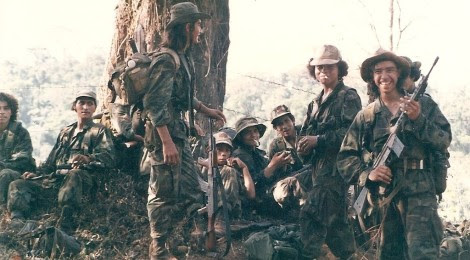
That the United States and NATO, a conventional defensive alliance, should be confounded by similar maneuvers on the part of Russia and left groping to “connect the dots” from Crimea to the Baltic is not a surprise. What should not be a matter for confusion is that hybrid warfare is not the exclusive province of a nefarious Putin, but rather a method available to any power with the motivation to employ it. This takes us only half way toward a solution. But, in paraphrase of Clausewitz, the first essential act of judgment is to establish the kind of war in which we are embroiled.
America Did Hybrid Warfare Too

April 7, 2015 · in 

The 5,548 ISIS Targets Struck By Coalition Air Forces, in 3 Charts
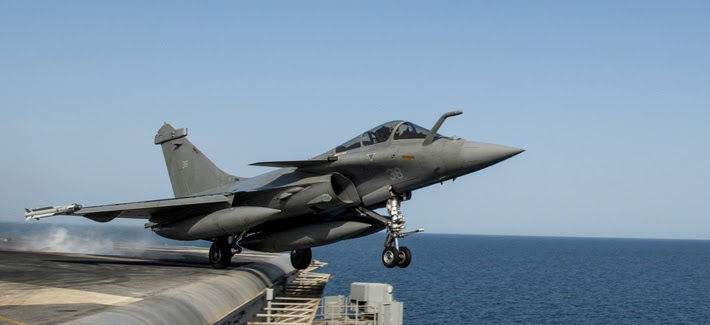
A French navy Rafale Marine aircraft launches from the U.S. Navy aircraft carrier USS Carl Vinson, on March 3, 2015.

http://www.defenseone.com/threats/2015/04/5548-isis-targets-struck-coalition-air-forces-3-charts/109426/?oref=defenseone_today_nl

APRIL 6, 2015BY KEDAR PAVGI
The Pentagon’s latest data release finally includes airplanes that were destroyed in fall 2014.

Thursday, July 11, 2013

Optimising the Potential of Special Forces (An Indian Perspective)

The is quite a critique of the Indian military.  Example:

A lackadaisical approach to internal security and failure to coordinate a response has been the bane of the problem in India.

This excerpt is an interesting assessment of US and other Special Forces (or Special Operations Forces in US terminology).  Sounds like an Indian assessment of the US Global SOF Network.

Why the US has managed to secure its mainland post 9/11 is not only because of an efficient Homeland Security organisation but because the US Special Forces (USSF) are operating in 200 countries including India. Significantly, USSF have undeclared tasks such as conducting proactive, sustained ‘man-hunts’ and disrupt operations globally; building partner capacity in relevant ground, air and maritime capabilities in scores of countries on a steady – state basis; helping generate persistent ground, air and maritime surveillance and strike coverage over ‘under-governed’ areas and littoral zones and employing unconventional warfare against state-sponsored terrorism and trans-national terrorist groups globally. Before 26/11, Al-Qaeda had planned similar operations against New York but could not because the USSF had infiltrated Al-Qaeda. One cannot guard the house by simply barricading it. You must patrol the streets and the area outside. 
Growing inter-dependence and interlinking of terrorist groups regionally and internationally should be a matter of serious concern. It is not the US alone that has deployed its Special Forces abroad. This is the case with most advanced countries including UK, Russia, Israel, China and even Pakistan. Pakistan’s SSG was operating with the Taliban in Afghanistan and has been active in Jammu and Kashmir, Nepal and Bangladesh, primarily training anti-India forces. There is a strong possibility of their presence in the Maldives and Sri Lanka as well, aside from presence within India. The Chinese have been smarter. For all the development projects throughout the globe, including in Myanmar, Nepal, Pakistan-POK, Sri Lanka, Bangladesh and Seychelles, contracts underway by PLA-owned/affiliated companies employ serving and veteran PLA soldiers and disguised Special Forces with assigned tasks, including evacuation of Chinese citizens from that country in case of emergencies.
V/R
Dave

Optimising the Potential of Special Forces

 By Lt Gen Prakash Katoch Issue Vol. 28.2 Apr-Jun 2013 | Date : 08 Jul , 2013

In India, the lack of strategic culture, more on account of keeping the military out from strategic military decision making, has led the hierarchy to believe that conventional forces coupled with nuclear clout can deter us from irregular threats. Nothing can be farther from the truth. Pakistan, though conventionally inferior, has been successfully playing her ‘thousand cuts policy’ knowing full well that India has failed to develop the required deterrent. It is our inability to find a cure to this Achilles’ heel, that has led China, which was hitherto using Pakistan as proxy to wage irregular war on India, now directly aids and supports insurgent and terrorist outfits inside India.

A lackadaisical approach to internal security and failure to coordinate a response has been the bane of the problem in India.
The last conventional war was fought between Russia and Georgia in 2005. In the case of India, the last conventional war or rather conflict was in 1999 in the Kargil region though Musharraf wanted the world to believe that so-called freedom fighters were fighting the Indian Army and not Pakistani regulars (Northern Light Infantry and SSG). Over the last two decades, conflict has increased exponentially with regular armies fighting irregulars or between irregulars, latter more so because of sectarian reasons rather than ideology. In India, irregular forces have been confronting the security sector. In a rogue neighbour like Pakistan, the term ‘non-state actors’ is a misnomer. The notorious exploits of the ISI have led the Deputy NSA to call upon the international community to label it a ‘terrorist organisation’.

In India, the lack of strategic culture, more on account of keeping the military out from strategic military decision making, has led the hierarchy to believe that conventional forces coupled with nuclear clout can deter us from irregular threats. Nothing can be farther from the truth. Pakistan, though conventionally inferior, has been successfully playing her ‘thousand cuts policy’ knowing full well that India has failed to develop the required deterrent. It is our inability to find a cure to this Achilles’ heel, that has led China, which was hitherto using Pakistan as proxy to wage irregular war on India, now directly aids and supports insurgent and terrorist outfits inside India.

Battlefield India

A lackadaisical approach to internal security and failure to coordinate a response that includes external factors has been the bane of the problem in India. This is further aggravated by lack of governance, inadequate laws and lack of implementing existing laws on account of vote-bank politics. Mismanagement of social change has increased strife. We continue to retain the label of ‘soft state’ with actions like permitting Hurriyat to meet Pakistani visitors inside the Pakistani embassy, granting visas to Hurriyat to seek blessings of Hafiz Saeed in Pakistan and politicians shunning bureaucratic advice to not invite Rehman Malik and to not entertain Raja Pervaiz Ashraf visiting Ajmer privately. Incidentally, in a book authored by Sheikh Mujibur Rehman prior to the formation of Bangladesh, he wrote, “Because Eastern Pakistan must have sufficient land for expansion Eastern Pakistan must include Assam to be financially and economically strong.”

In a rogue neighbour like Pakistan, the term ‘non-state actors’ is a misnomer.
Ironically, our politicians permitted the take-over of Assam by illegal Bangladeshi migrants (facilitating their Indian citizenship) through the infamous 1983 Illegal Migrants (Determination by Tribunal) (IMDT) Act till it was struck down by the Supreme Court of India in 2005, but not before Assam was reduced to a Hindu minority state. Today, the MHA has banned no less than 35 terrorist organisations in India, though there are many more that need banning, like the Kerala headquartered Popular Front of India (PFI). Lack of an Internal Security Strategy, governance and aforesaid factors have provided an enormous asymmetric battlefield to our adversaries anchored around the Maoist insurgency, and China and Pakistan would be foolish not to exploit it.

Based on the 1960’s advice of China, Pakistan has raised anti-India jihadi forces and inducted armed modules pan-India that were identified in some ten states including Assam, West Bengal and Kerala in 1992-1993. SIMI started sending cadres to Pakistan for training with the mujahedeen, Taliban and Al-Qaeda and established linkages with radical organisations in Bangladesh for terrorist training. In recent years, Pakistan’s ISI had organised nucleus Maoist training in mines/IEDs/explosives with LTTE that is extracting a heavy price through CRPF cadres being killed and maimed. China backs the Maoist insurgency in India. Not only is China providing sophisticated weapons and communication equipment to the Maoists but over past several months, has provided arms manufacturing facilities to Maoists within India and to Kachen rebels in Myanmar. The Indian Mujahideen (IM) is the creation of Pakistan and the latter’s involvement in various terrorist acts including the recent Hyderabad blasts is unmistakable. The LeT has been hobnobbing with the Maoists and both LeT and Al Qaeda have established roots in Kerala and are deeply linked with the PFI.

India must also focus on the Chinese ‘String of Pearls’ surrounding us being reinforced by radical Islamic terrorism, particularly in Bangladesh and Maldives as it will fuel our internal security situation further. India has been talking of a cold start strategy for many years but Bangladesh too was practicing cold start during the BNP regime headed by Khaleda Zia through annual exercises racing for the Siliguri Corridor. That is the reason why China and Pakistan are trying their level best to integrate and boost insurgencies within India. It is no secret that the BNP-led government in Bangladesh has always been pro China and Pakistan. It is supported by terrorist organisations including Jamat-e-Islami and Ahle Hadith Andolan that are viciously anti-India and are funded by Saudi Arabia in a major way.

China’s newfound interest in Maldives may advertently or inadvertently help spur anti-India sentiments in Maldives.

The cold start by Bangladesh independently is little threat but when viewed in conjunction with China’s designs for Doklam Plateau in Bhutan, the state of Arunachal Pradesh and the strategic footprints already made in Northern Nepal, the threat magnifies. In Maldives, the advent of radicalism and anti-India perceptions have been building since 2005 when the youth started going for training under the LeT in Pakistan, drugs started flowing in and signs of radicalisation became visible on the streets. It did cause alarm bells in the Maldives National Defence Forces (MNDF) but nevertheless radicalism is on the rise. In a country where, as per 2008 estimates, there were 70,000 foreign employees and some 33,000 illegal immigrants, the presence of Al Qaeda and LeT in Maldives cannot be ruled out, as would be their links with their operatives and PFI in Kerala. This poses a major threat to soft targets in South India. Additionally, China’s newfound interest in Maldives may advertently or inadvertently help spur anti-India sentiments there.


Deterrence
(Continued at the link below)

Thursday, December 20, 2012

A Sobering Assessment (Asia and the Global Trends 2030 report)


As I have mentioned before the importance of Global Trends 2030 is not its predictive nature (the measure of effectiveness of past Global Trends reports is not whether they have "got it right" or if their forecasts came true, but rather if the reports have been used by policy makers and strategists as a catalyst for critical thinking and the development of policies and strategies to attempt to either support and reinforce positive or desirable trends or counter or alter those negative or undesirable trends.  If the assessment is sobering then we should be asking what we can do from a policy and strategy perspective?  When our plans don't work out the way we want we are fond of saying "the enemy has a vote" implying that his actions (usually unforeseen) unhinged our plans.  Global Trends 2030 gives us an opportunity so that we can say "we have a vote" and execute plans, policies, and strategies to support our interests.  

Since this report is "grimmer" regarding the Indo-Pacific Asia region than past reports perhaps the US rebalance to Asia will have an effect on this trend (positive I hope!)
V/R
Dave


By Rory Medcalf

December 21, 2012

There are plenty of big stories in Asian security this month – the North Korean rocket test, China-Japan tensions, and the implications of the Japanese and South Korean elections for regional order.  But taking the long view, there is one story that the region's security watchers should not ignore — the release of the U.S. National Intelligence Council's 2030 report on global futures, titled Alternative Worlds. 

This document is full of thoughtful and in many instances worrying assessments about where the Asian strategic order is going, and about the risks of instability and conflict in the years ahead.  It may in theory be a global report, but many of its more troubling projections have an Asian angle, unsurprisingly given the shift of economic and strategic centrality to this region.

To be fair, much of the document is occupied with an impartial examination of megatrends, and some of this is good news, for instance the growth of the global middle-class. But one of the key so-called game changers highlighted in the survey is about the potential for increased conflict. And here, although there is the usual homage paid to the war-constraining qualities of economic interdependence, we find some grim observations.

“The risks of interstate conflict are increasing owing to changes in the international system”: that is, power shifts, notably but not only the rise of China, are upsetting the Asian power equilibrium.
“If the United States is unwilling or less able to serve as a global security provider by 2030, the world will be less stable”: this is an honest but also exceptionally forthright point to make by an American intelligence community which has traditionally analyzed the external world while suspending judgment about the consequences of America's own policy behavior. It is a clear warning against American retrenchment from maritime Asia’s strategic affairs.

While the Middle East and South Asia may remain more conflict prone regions than East Asia, “a conflict ridden East Asia would constitute a key global threat and cause large-scale damage to the global economy”.
(Continued at the link below)

Thursday, December 6, 2012

Counter-Insurgency Best Practices: Applicability to Northeast India


An interesting read from the Indian perspective.  Although I am always opposed to new buzzwords to simply rename things when we want to change direction or make an impact, I do like the Indian use of "sub-conventional operations."  Perhaps if we had conceived the 2006 COIN doctrine from the perspective of sub-conventional operations we would not have gone down the road of  the COINdinista versus COINtra with people arguing that COIN is the graduate level of war or not. (my thoughts on this from 2008 are here: http://smallwarsjournal.com/blog/is-counterinsurgency-the-graduate-level-of-war)
The Indian army also published its first ever Doctrine for Sub Conventional Operations[2] in 2006 where the focus was on general features of a successful counter-insurgency campaign from the point of view of the army.

Some interesting excerpts:
To argue for uniqueness however misses an important point; that there are certain common features of counter-insurgency that are valid across time and space as is indicated by the rich literature on counter-insurgency. These practices or features are so commonsensical that one cannot seriously challenge them without appearing spurious. For instance, can one deny the criticality of political primacy in counter-insurgency in a democracy; the significance of people’s support; intelligence; unity of effort; resolute leadership, etc. State agencies that deal with counter-insurgency require a frame of reference in order to have a common map based on which adaptation and learning can take place. Take the case of the Indian army. While the Indian army deals with numerous “unique” insurgencies in the northeast, the doctrine does not offer a recipe that caters to each. Rather, it has a general set of features of what could be optimal counter-insurgency practices, be it intelligence, training, winning hearts and mind, terrain knowledge, leadership
From the conclusion:
In war, of any character, be it conventional or sub conventional, the basic principles are the same: uncertainty, chance, enmity, friction, passion, and violence. But two sides may fight it differently or interpret the principles differently based on capacity and capability. The asymmetry of power plays a major role in counter-insurgency. Insurgencies wage protracted conflicts not only because they want to impose a psychological toll on the counter-insurgency actors but also because they require time to find recruits, generate resources and establish base areas. It must be recognized that the aim of the insurgents is not to kill the counter-insurgency actors but to establish competitive parallel governing structures aimed at controlling the population. The counter-insurgency actors must succeed in breaking the financial, ideological, and intimidation linkages between the population and the insurgents. For the counter-insurgency actors to succeed in this endeavour, popular legitimacy and population influence are the ingredients to success. To achieve this, adaptation and flexibility are the buzz words.
V/R
Dave

Counter-Insurgency Best Practices: Applicability to Northeast India

Journal Article | December 6, 2012 - 5:30am

In a fight between a fly and a lion, the fly cannot deliver a knockout blow and the lion cannot fly
                                                                                             Lt. Col. David Galula
Abstract
                India has a longstanding counter-insurgency experience in the Northeast; a region that has suffered from multiple insurgencies since the 1950s. This counter-insurgency experience has witnessed its share of successes and failures. This article locates the Indian counter-insurgency experience in the Northeast of India within the conceptual framework of counter-insurgency best practices. The best practices include: Primacy of Political Goals; Centre of Gravity: Population; Counter-Propaganda; Resolute leadership; Intelligence; Unity of Effort; Appropriate Force Structures; Rule of Law; and Operational Clarity. The selected best practices have been identified across the literature as most critical for the successful conduct of counter-insurgency operations. Analyzing the Indian counter-insurgency experience in the Northeast of India within these best practices, the article concludes that ‘popular legitimacy and population support’ are the most critical factors for optimal counter-insurgency outcomes. 

Insurgencies by their very nature are a violent struggle against the state for legitimacy and influence over relevant populations. Therefore, in order to win against any insurgency, the first core insight for any counter-insurgency force is to gain the support of the population. Without this support, it becomes rather difficult, if not impossible, to conduct counter-insurgency operations. Coupled with population support is the criticality of efficient intelligence. However, it is not enough to merely state that population support or intelligence is vital for counter-insurgency; an article on counter-insurgency best practices should ideally provide the path to get there. This article thereby discusses certain counter-insurgency best practices and the means to operationalize these practices on the ground. The best practices selected for focused study in the article are based on a literature survey on counter-insurgency theory, doctrines and manuals of the Indian, British and the US military. This literature, in turn, has been utilized to assess the Indian Army’s counter-insurgency operations in the Northeast of India. This article is meant to be the start of a discussion on counter-insurgency best practices and is not the final word on the subject. There will be many more such exercises with perhaps different lists of best practices for sure. However, every project of this nature must have a well defined scope. Hence, the aim here is to limit the best practices to a manageable number with optimal analysis and debate.
It is often argued that the “most striking single characteristic of insurgencies is their dissimilarity”.[1] 

We are reminded time and again that each insurgency has a unique setting with its own causes, organizational structure, population base, terrain, dynamics of allegiance, etc. Yet despite this caution, societies and their militaries have engaged in rich discussion and published both counter-insurgency theory and field manuals aimed at generalizations across cases. The Indian army also published its first ever Doctrine for Sub Conventional Operations[2] in 2006 where the focus was on general features of a successful counter-insurgency campaign from the point of view of the army. I am also deeply aware that each insurgency is unique having conducted fieldwork over the years in conflict affected states in Northeast India. The insurgencies within Assam itself differ from each other, as well as with those in neighbouring states like Manipur and Nagaland. To argue for uniqueness however misses an important point; that there are certain common features of counter-insurgency that are valid across time and space as is indicated by the rich literature on counter-insurgency. These practices or features are so commonsensical that one cannot seriously challenge them without appearing spurious. For instance, can one deny the criticality of political primacy in counter-insurgency in a democracy; the significance of people’s support; intelligence; unity of effort; resolute leadership, etc. State agencies that deal with counter-insurgency require a frame of reference in order to have a common map based on which adaptation and learning can take place. Take the case of the Indian army. While the Indian army deals with numerous “unique” insurgencies in the northeast, the doctrine does not offer a recipe that caters to each. Rather, it has a general set of features of what could be optimal counter-insurgency practices, be it intelligence, training, winning hearts and mind, terrain knowledge, leadership, etc.[3]

There are several extremely rich and detailed documents on counter-insurgency warfare. The most notable amongst them are R W Kromer’s The Malayan Emergency in Retrospect: Organization of a Successful Counterinsurgency Effort, a 1972 RAND study that detailed the reasons why the British succeeded in Malaya;[4] Robert Thompson, Defeating Communist Insurgency: The Lessons of Malaya and Vietnam;[5] David Galula’s Counter-Insurgency Warfare Theory and Practice,[6] which counts as one of the most extensive expositions on the qualities required by counter-insurgency forces to succeed against an insurgency; Bruce Hoffman and Jennifer Morrison Taw’s A Strategic Framework for Countering Terrorism and Insurgency;[7] Frank Kitson’s Low Intensity Operations: Sub-version Insurgency & Peacekeeping;[8] Alastair Horne’s A Savage War of Peace: Algeria 1954-1962;[9] Roger Trinquier’s Modern Warfare: A French View of Counter-insurgency;[10] C E Callwell’s Small Wars A Tactical Textbook for Imperial Soldiers;[11] Rajesh Rajagopalan’s Fighting Like a Guerrila The Indian Army and Counterinsurgency,[12] David Kilkullen’s influential “Counterinsurgency Redux,[13]etc. Amongst the counter-insurgency doctrines, guides and manuals that have been uitilized for this article are: the Indian Army’s sub-conventional operations doctrine;[14] the United States military’s manual and guides on counter-insurgency;[15] the US Joint doctrine on counter-insurgency operations;[16] the British field manual on counter-insurgency;[17] etc.
(Continued at the link below)

Giving Tuesday Recommendations

  Dear Friends,  I do not normally do this (except I did this last year and for the last few years now, too) and I certainly do not mean to ...