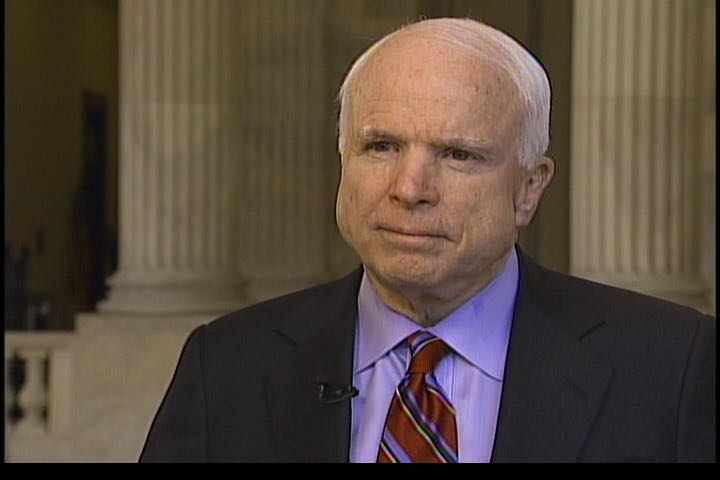
The 33 page report can be downloaded at the link below. I have pasted the table of contents as well as the three paragraphs on SOF since that is my focus (along with north Korea of course and I am even happy to see that north Korea is mentioned even in the SOF section. Although the first and third paragraphs focus on SOF and counterterrorism for the most part the second paragraphs address special warfare. I am gratified to see Senator McCain address that aspect of SOF since so many in government overlook it. It is in keeping with my major talking points on Special Operations:
1. The future is characterized (not exclusively of course) by states and non-state actors conducting UW (exploiting revolution, resistance, insurgency, terrorism, and civil war (RRIT & CW)) and thus there is a requirement to conduct Counter-UW. SOF is organized, educated, trained, equipped and optimized for both (but does not conduct them unilaterally or in a vacuum but as one element of the means in support of a joint campaign and national strategy)2. We have the greatest Surgical Strike capability in the world but we need to prioritize and resource correctly (but not necessarily equally) our Special Warfare capabilities. - But we have to be careful of Anthony Cordesman’s “Strategic Tokenism.”3. We need Strategists and Policy Makers who have a deep (or at least sufficient) understanding of and value the strategic options of offered by UW and Counter-UW.4. Effective Special Warfare (which includes UW and counter-UW and supports Political Warfare) is counter-intuitively characterized by slow and deliberate employment – long duration actions and activities, relationship establishment, development, and sustainment.5. SOF will have always have a role in hybrid conflict and major combat operations.
V/R
Dave
RESTORING AMERICAN POWER
Recommendations for the FY 2018-FY 2022 Defense Budget By Senator John McCain, Chairman, Senate Armed Services Committee
Executive Summary 2
The Failure of the Budget Control Act 3
A Better Defense Strategy 5 Beginning to Rebuild the Military 8
Navy 9
Marine Corps 11
Air Force 12
Army 14
Special Operations Forces 15
Nuclear Forces 16
Missile Defense 17
Space 17
Cyber 18
Force Posture 18
New Technologies 19
Actions for Congress 20
Appendix 22
Special Operations Forces.
For the last 15 years, U.S. special operations forces (SOF) have been a critical component of the fight against global terrorist groups. These highly innovative and agile units are organized with a global outlook and able to conduct operations in austere and complex environments with a relatively small footprint, making them a logical leading element of the global counterterrorism mission. SOF have increasingly been optimized for that mission over the past 15 years, while high operational tempo and repeated deployments have put real strains on SOF operators and units, despite the growth in their ranks that has occurred in recent years. Because the global counterterrorism mission shows no sign of diminishing in the foreseeable future, SOF will continue to play an outsized role in that effort.
At the same time, SOF must increasingly perform critical missions within the broad discipline of irregular warfare beyond counterterrorism. China, Russia, Iran, and North Korea are increasingly competing with the United States below the threshold of major conflict in what has been called “hybrid warfare” or “gray zone” operations. These threats across Europe, the Middle East, and Asia are aimed at challenging U.S. interests and partnerships and destabilizing regional order. Put simply, SOF has an indispensable role to play in great power competitions and global counterproliferation. This reality demands a greater employment of the broad spectrum of U.S. special operations capabilities. SOF’s ability to conduct low-visibility, special warfare operations in politically sensitive environments makes them uniquely suited for this mission.
An even greater reliance on SOF beyond counterterrorism will likely require further investments in new special operations capabilities and some additional force structure. The challenges posed by militarily advanced great powers, in particular, will require the development and employment of new technologies and capabilities. At the same time, the readiness of the force should remain a priority, which will likely necessitate additional capacity. The growth in SOF end-strength called for in the 2010 and 2014 Quadrennial Defense Reviews never fully materialized because of budget constraints. Any growth now will depend on increases in the size of our conventional forces, since they will be the sources from which SOF operators are assessed and selected, as well as the dominant providers of enabling support.